Waterdrop Water Filtration Buying Guide: Modern Pure Water Solutions
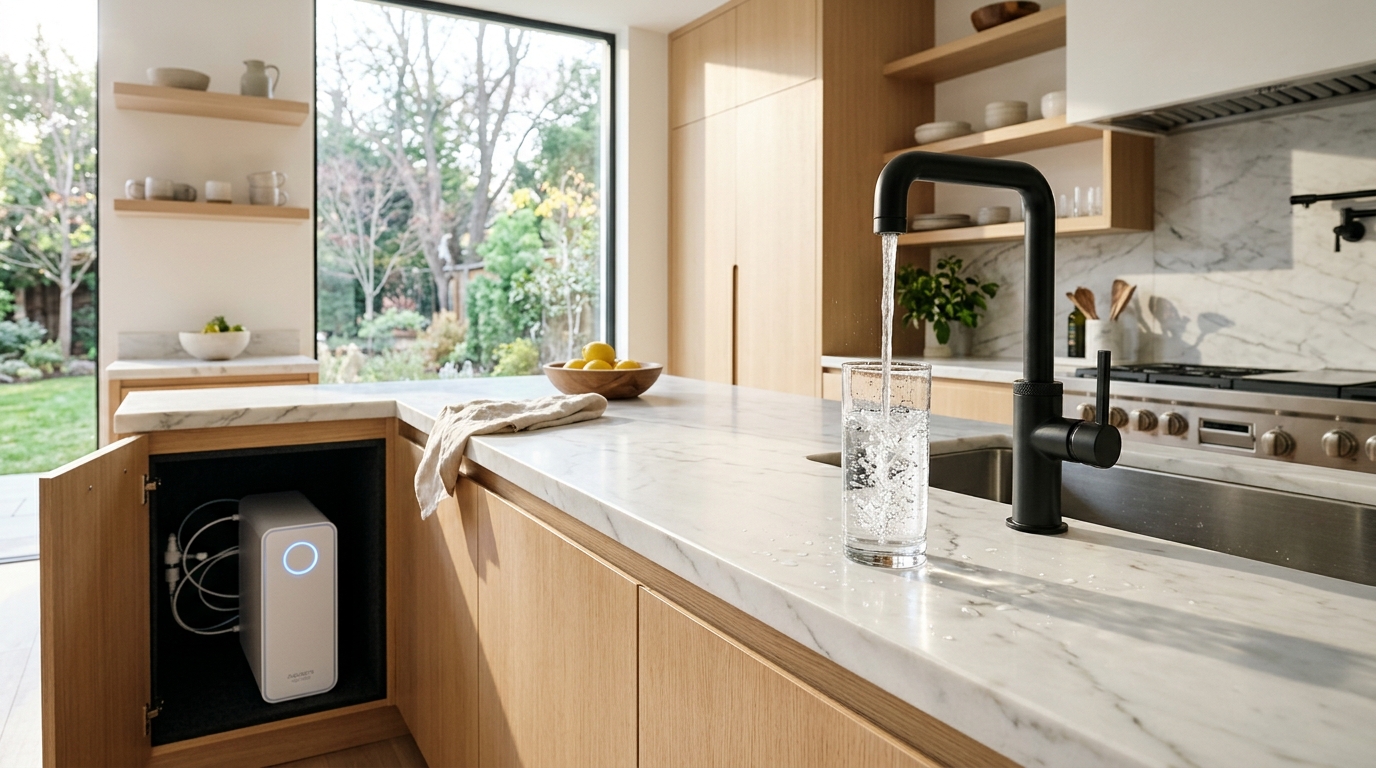
Waterdrop has revolutionized residential drinking water by engineering high-speed, tankless reverse osmosis systems and precision filtration appliances. By eliminating stagnant storage tanks and bulky traditional housings, Waterdrop systems prevent secondary contamination, reclaim up to 70% of cabinet storage space, and deliver fast, on-demand pure water. Explore our tested recommendations and complete technical breakdown below.
1. Find the Right Water Filtration Setup: 5 Core Buyer Paths
Selecting the best water filter begins with understanding your home’s water supply, physical kitchen layout, household size, and specific water consumption habits. Rather than forcing one system onto every home, Waterdrop offers tailored hardware architectures for five distinct user profiles:
1. The High-Demand Family Kitchen
Key Needs: Instant fast flow for cooking, baking, filling large stockpots, and multiple family members drinking simultaneously without waiting.
Recommended Match: Waterdrop G3P800 (800 GPD) or Waterdrop X12 (1200 GPD) tankless reverse osmosis systems.
2. Renters, Apartments & Dorms
Key Needs: Zero plumbing alterations, no drilling into countertops or sink drain pipes, portable plug-and-play operation.
Recommended Match: Waterdrop A1 or Waterdrop C1S countertop reverse osmosis systems, or Waterdrop Electric Pitcher.
3. Tea, French Press & Baby Formula
Key Needs: Instant hot water dispensing at exact preset temperatures (104°F to 203°F) straight from the faucet without a standalone electric kettle.
Recommended Match: Waterdrop K6 under-sink system or Waterdrop A1 countertop station.
4. Eco-Conscious & Zero Wastewater
Key Needs: High-purity filtration that eliminates 99% of bacteria, cysts, and chlorine while retaining healthy calcium/magnesium minerals and generating zero wastewater.
Recommended Match: Waterdrop TSU / TSA 3-Stage Ultrafiltration system (non-electric, 0.01 micron).
2. Waterdrop Product Architecture & Ecosystem Overview
Unlike old-school reverse osmosis filters with a pressurized bladder tank and three sprawling filter housings, Waterdrop engineered a self-contained, integrated chassis with internal booster pumps, leak-detection sensors, composite multi-stage cartridges, and digital monitoring.
Traditional RO systems store filtered water in an internal rubber diaphragm tank for hours or days, where water can stagnate, leach rubber odors, and experience secondary bacterial growth. Waterdrop’s tankless technology filters water instantly on-demand as you turn on the faucet. An internal micro-pump pressurizes municipal water against a 0.0001-micron semi-permeable membrane at high velocity, providing fresh, pure water in seconds while slashing cabinet space requirements by over 70%.
| Category | Representative Models | Filtration Type | Pure-to-Drain Ratio | Key Target Application |
|---|---|---|---|---|
| High-Speed Under-Sink RO | G3P800, X12, G3P600 | Multi-Stage RO (0.0001 μm) | 3:1 to 2:1 Efficiency | Busy homes, primary kitchen sink, whole-food cooking |
| Instant Hot Under-Sink RO | Waterdrop K6 | 5-in-1 RO + Flow-Thru Heater | 2:1 Efficiency | Instant tea, coffee, baby formula, rapid meal prep |
| Hot & Cold Countertop Station | Waterdrop A1 | 7-Stage RO + Compressor Cooling | 2:1 Efficiency | Apartments, home offices, wet bars, renters |
| Under-Sink Ultrafiltration | TSU / TSA Series | 0.01 μm UF + Carbon Block | 0:0 (Zero Wastewater) | Retaining natural minerals, non-electric kitchen setups |
| Pitchers & Dispensers | Electric Pitcher, Chubby Pitcher | Fast Micro-Filtration + Carbon | Zero Wastewater | Entry-level budget filtration, bedside, refrigerator door |
3. In-Depth Waterdrop Product Reviews & Technical Profiles
Here is an exhaustive, technical review of Waterdrop’s leading water filtration systems. Each profile includes verified specifications, flow ratings, pure-to-drain efficiency, dimensions, key strengths, and important limitations.
1. Waterdrop G3P800 Tankless Reverse Osmosis System
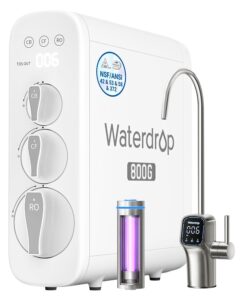
The Waterdrop G3P800 is the benchmark for modern residential under-sink water purification. Featuring an 800 GPD (gallons per day) internal booster pump, the G3P800 fills an 8-ounce glass of water in just 5 seconds. What separates the G3P800 from competing RO systems is its industry-leading 3:1 pure-to-drain efficiency ratio and built-in LED ultraviolet (UV) sterilization module, providing an extra layer of microbiological protection without chemical additives.
| Daily Production Rate | 800 GPD (~0.55 Gallons / Minute flow rate) |
|---|---|
| Filtration Stages | 9-Stage composite filtration + UV sterilizing light |
| Pure-to-Drain Ratio | Up to 3:1 (dispenses 3 cups pure water for every 1 cup drain) |
| Smart Faucet Display | Real-time incoming/outgoing TDS monitor & filter life ring |
| NSF / ANSI Certifications | NSF/ANSI 42, 53, 58, and 372 certified |
| Chassis Dimensions | 18.11″ Deep x 5.67″ Wide x 17.73″ High |
| Power Requirements | 110V AC standard household electrical outlet |
- Blazing fast 800 GPD flow rate eliminates waiting at the sink.
- 3:1 pure-to-drain ratio saves hundreds of gallons of water annually.
- UV light automatically activates during flow for viral/bacterial destruction.
- Smart faucet provides live TDS readout directly on the spout.
- Compact 5.67-inch slim profile preserves ample under-sink cabinet storage.
- Requires an unswitched 110V power outlet under the kitchen sink.
- Pure RO water has naturally low mineral content unless paired with a remineralizer.
- Initial investment is higher than traditional 50 GPD tank-based RO units.
2. Waterdrop X12 Ultra-Fast Remineralizing RO System
The Waterdrop X12 is engineered for demanding households that require rapid-fire dispensing and perfectly balanced, mineral-rich alkaline drinking water. Delivering a massive 1200 GPD output, it fills a 1-liter container in roughly 10 seconds. Crucially, the X12 features an 11-stage filtration architecture with Waterdrop’s integrated Healthy Boost remineralization cartridge, infusing essential calcium and magnesium ions to restore natural mineral taste and maintain an optimal pH balance of 7.5 to 8.5.
| Daily Production Rate | 1200 GPD (Ultra-high flow ~0.83 Gallons / Minute) |
|---|---|
| Filtration Stages | 11-Stage system featuring 0.0001μm RO membrane & alkaline mineralizer |
| Mineral Infusion | Natural calcium and magnesium remineralization (pH 7.5–8.5) |
| Pure-to-Drain Ratio | Up to 3:1 efficiency |
| Smart Faucet | Full-color OLED digital smart faucet with TDS & cartridge monitoring |
| Chassis Dimensions | 18.2″ Deep x 6.25″ Wide x 16.72″ High |
| Power Requirements | 110V AC electrical power required |
- Fastest residential flow rate on the market (1200 GPD).
- Solves the “flat” taste of pure RO water by restoring healthy alkaline minerals.
- Top-tier contaminant reduction across heavy metals, PFAS, microplastics, and VOCs.
- Full-color OLED faucet displays filter life, water volume, and real-time TDS.
- Slightly heavier chassis (approx. 38.9 lbs) requiring a sturdy cabinet floor.
- Remineralization cartridge adds a routine replacement item to the annual cycle.
- Premium price point reflecting commercial-grade components.
3. Waterdrop G3P600 Tankless Reverse Osmosis System
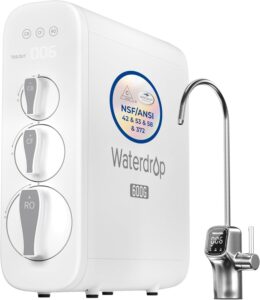
For homeowners seeking the tankless design benefits of the G3 series at a more accessible price point, the Waterdrop G3P600 hits the sweet spot. Delivering 600 GPD, it produces an 8-ounce glass of pure water in about 8 seconds. It retains the slim 5.7-inch footprint of the G3 series, an efficient 2:1 pure-to-drain ratio, and composite twist-and-lock filters that take less than 3 seconds to replace without tools.
| Daily Production Rate | 600 GPD (~0.42 Gallons / Minute) |
|---|---|
| Filtration Stages | 8-Stage composite filtration (CF + CB + 0.0001μm RO membrane) |
| Pure-to-Drain Ratio | 2:1 (produces 2 cups pure water for every 1 cup drain) |
| Smart Faucet | LED color indicator ring on faucet base showing filter status |
| Chassis Dimensions | 18.06″ Deep x 5.67″ Wide x 17.76″ High |
| Certifications | NSF/ANSI 58 and NSF 372 lead-free certified |
- Superb balance of flow rate, filtration performance, and price.
- Compact 5.7-inch profile fits comfortably next to kitchen garbage disposals.
- 2:1 pure-to-drain ratio drastically outperforms 1:4 traditional RO systems.
- Front-accessible twist-and-pull filter replacement with zero water shutoff required.
- Does not include the UV sterilization chamber found on the G3P800.
- Smart faucet features an LED ring rather than a numeric digital TDS screen.
4. Waterdrop K6 Instant Hot Under-Sink RO System
The Waterdrop K6 is an engineering breakthrough that eliminates both countertop kettles and under-sink water filters by combining an 800/600 GPD reverse osmosis system with an instant-heating thermal core. Dispensing purified hot water from 104°F to 203°F in seconds, it provides precision temperature control right at your sink deck. An integrated child-lock safety ring prevents accidental scalding, making it indispensable for tea enthusiasts, coffee lovers, and parents preparing warm baby formula.
| Daily Production Rate | 600 GPD with instant flow-through heating element |
|---|---|
| Temperature Range | Step-less adjustment from 104°F (40°C) to 203°F (95°C) |
| Filtration Stages | 5-in-1 integrated composite filter with 0.0001μm RO membrane |
| Pure-to-Drain Ratio | 2:1 efficiency |
| Smart Faucet | Digital touch screen faucet with live temperature selection & child lock |
| Power Requirements | 110V/120V dedicated outlet (higher wattage required during active heating) |
- Delivers boiling-hot filtered water directly from the tap in under 3 seconds.
- Replaces electric kettles, saving valuable kitchen countertop space.
- Child safety lock automatically engages to prevent hot water accidents.
- Precision temperature display allows exact dialing for green tea (175°F) or coffee (200°F).
- High electrical draw during heating requires a stable, non-shared electrical circuit.
- Maximum hot water flow rate is slightly slower than ambient water to allow proper heating contact.
5. Waterdrop A1 Countertop RO Hot & Cold Water Dispenser
The Waterdrop A1 is an all-in-one luxury countertop appliance for renters, apartments, home offices, and luxury master suites. Unlike typical countertop units that only offer ambient filtration, the A1 integrates a high-efficiency miniature compressor cooling system that chills water down to 41°F, paired with an instant heating core that heats water up to 203°F in 3 seconds. It requires zero plumbing or drilling—simply plug it into any wall outlet, fill the tap water reservoir, and enjoy pure RO water instantly.
| Cooling Technology | True miniature compressor refrigeration down to 41°F (5°C) |
|---|---|
| Heating Technology | 3-Second rapid heating up to 203°F (95°C) with 6 temperature presets |
| Filtration Stages | 7-Stage RO filtration with 0.0001μm pore size |
| Tank Architecture | Dual-tank separation (raw feed water separated from concentrated wastewater) |
| Control Interface | Full-color OLED smart touch panel with cup volume and temperature presets |
| Plumbing Required | 100% plug-and-play; zero plumbing, drilling, or drain installation |
- True refrigerator-chilled water (41°F) without needing ice cubes.
- Instant boiling water on demand with 6 customized preset options.
- Zero installation—ideal for renters, offices, bedrooms, and RVs.
- Separated waste reservoir prevents wastewater from recycling back into feed water.
- Countertop footprint requires dedicated counter space near a power outlet.
- Requires manual refilling of the feed water tank and emptying of the wastewater tank.
6. Waterdrop C1S Countertop Portable Reverse Osmosis Unit
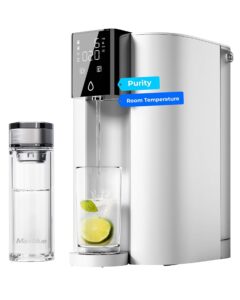
The Waterdrop C1S is designed for minimalist spaces, smaller apartment kitchens, dorm rooms, and recreational vehicles where counter space is at a premium. With an ultra-compact footprint and clean geometric styling, the C1S offers true 0.0001-micron reverse osmosis filtration without requiring a dedicated under-sink connection. Its magnetic water reservoir ensures effortless refilling and cleaning, making pure RO drinking water accessible anywhere with an electrical outlet.
| Filtration Type | Multi-stage composite RO membrane (0.0001 μm pore size) |
|---|---|
| Pure-to-Drain Ratio | 2:1 internal efficiency |
| Dispensing Method | Electric push-button dispensing with measured cup volumes |
| Mobility & Portability | Lightweight, integrated carrying handle, zero permanent installation |
| Cartridge Lifespan | Up to 12 months per composite cartridge |
- Extremely compact footprint fits under low-hanging kitchen wall cabinets.
- Magnetic water tank slides on and off smoothly for quick kitchen sink refills.
- True RO contaminant reduction without modifying rented property plumbing.
- Very quiet internal operation.
- Dispenses ambient room-temperature water only (no compressor cooling or boiling).
- Smaller water reservoir requires frequent refilling in multi-person households.
7. Waterdrop TSU / TSA 3-Stage Under-Sink Ultrafiltration System
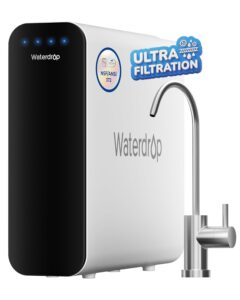
For homeowners who prefer natural, mineralized drinking water and want a zero-waste, non-electric system, the Waterdrop TSU/TSA Ultrafiltration series is the premier choice. Utilizing an advanced 0.01-micron hollow-fiber ultrafiltration membrane, it removes 99% of bacteria, protozoa, microplastics, chlorine, rust, and suspended solids while allowing beneficial natural minerals like calcium and magnesium to pass straight into your glass. Because it operates entirely on municipal water line pressure, it generates zero wastewater and requires zero electrical power.
| Filtration Membrane | 0.01-Micron Hollow Fiber Ultrafiltration (UF) Membrane |
|---|---|
| Filtration Stages | 3 Stages: PP Sediment + Coconut Shell Carbon Block + UF Membrane |
| Pure-to-Drain Ratio | 0:0 (100% water recovery; absolutely zero wastewater produced) |
| Mineral Retention | 100% natural retention of calcium, potassium, and magnesium ions |
| Power Requirement | Non-electric (operates solely on household tap water pressure) |
| Flow Rate | Fast steady flow (~0.75 Gallons / Minute) |
- Zero wastewater generated—environmentally responsible and cost-effective.
- Requires no electrical outlet under the sink; continues operating during power outages.
- Preserves natural dissolved minerals, giving water a crisp, refreshing spring-like taste.
- Exceptionally quiet with no booster pump vibration or hum.
- Does not lower Total Dissolved Solids (TDS) because mineral ions are smaller than 0.01μm.
- Not suitable for municipal water supplies contaminated with heavy dissolved salts or arsenic.
8. Waterdrop Electric Pitcher & Chubby Pitcher Series
Waterdrop’s pitcher series reimagines refrigerator door filtration with higher speeds and substantially longer cartridge lifespans than traditional gravity pitchers. The Waterdrop Electric Pitcher utilizes a rechargeable micro-motor to pump water through a multi-stage composite core in just 60 seconds, eliminating the frustrating 15-minute wait typical of gravity pitchers. For traditionalists, the Waterdrop Chubby gravity pitcher features a 200-gallon filter life (lasting 3 months compared to standard 40-gallon competitors).
| Filter Lifespan | Up to 200 Gallons (approx. 3 months of heavy family use) |
|---|---|
| Filtration Media | Japanese activated carbon block + high-efficiency ion-exchange resin |
| Flow Speed | Electric model filters a full pitcher in under 1 minute; gravity models in ~5 mins |
| Certifications | NSF/ANSI 42 (chlorine, taste, odor) and NSF 372 lead-free certified |
| Capacity | Electric Pitcher: 15 cups / Chubby Pitcher: 10 cups |
- Electric model dispenses filtered water 5x faster than conventional gravity pitchers.
- 200-gallon filter lifespan lasts 5 times longer than typical 40-gallon pitchers.
- BPA-free construction with ergonomic non-slip handle and dust-proof spouts.
- Ultra-low upfront cost with immediate aesthetic water quality improvement.
- Does not remove dissolved minerals or heavy TDS levels (requires reverse osmosis for TDS).
- Electric model requires occasional USB-C recharging (lasts ~30 days per charge).
4. Master Comparison Table: Waterdrop Filtration Lineup
Compare all eight Waterdrop models side-by-side across essential parameters including filtration technology, flow capacity, pure-to-drain efficiency, electrical requirements, and optimal household applications:
| Model | Type | Flow / Capacity | Filtration Stages | Pure:Drain | Power | Special Advantage | Action |
|---|---|---|---|---|---|---|---|
| G3P800 | Under-Sink RO | 800 GPD | 9 Stages + UV | 3:1 | 110V AC | UV light + Smart TDS Faucet | View on Amazon → |
| X12 | Under-Sink RO | 1200 GPD | 11 Stages + Minerals | 3:1 | 110V AC | Alkaline remineralization & ultra-fast flow | View on Amazon → |
| G3P600 | Under-Sink RO | 600 GPD | 8 Stages | 2:1 | 110V AC | Best balance of price & slim 5.7″ profile | View on Amazon → |
| K6 | Under-Sink RO | 600 GPD | 5-in-1 Composite | 2:1 | 110V AC | Instant hot water (104°F–203°F) + safety lock | View on Amazon → |
| A1 | Countertop RO | 100 GPD | 7 Stages | 2:1 | 110V AC | Compressor chilled (41°F) & boiling water | View on Amazon → |
| C1S | Countertop RO | 75–100 GPD | Multi-Stage RO | 2:1 | 110V AC | Compact plug-and-play for renters | View on Amazon → |
| TSU/TSA | Under-Sink UF | ~0.75 GPM | 3 Stages (UF) | 0:0 (Zero Waste) | None | Retains beneficial minerals, no electricity | View on Amazon → |
| Electric Pitcher | Pitcher / Portable | 15 Cups | Composite Carbon | 0:0 (Zero Waste) | USB Recharge | 60-Second electric rapid flow, 200 gal life | View on Amazon → |
5. Reverse Osmosis vs. Carbon vs. Ultrafiltration: Understanding Filtration Science
One of the most common points of confusion for buyers is choosing between Reverse Osmosis, Ultrafiltration, and Carbon filtration. Each technology operates at fundamentally different pore sizes and targets different contaminant categories.
Reverse Osmosis (0.0001 Micron)
How It Works: Water is forced under pressure through a dense semi-permeable membrane with pores roughly 500,000 times smaller than a human hair.
What It Removes: Total Dissolved Solids (TDS), heavy metals (lead, arsenic, chromium), fluoride, nitrates, PFAS forever chemicals, and microplastics.
Trade-off: Produces concentrated wastewater and strips natural minerals (unless remineralized).
Ultrafiltration (0.01 Micron)
How It Works: Uses bundles of hollow-fiber porous tubes that screen out physical particles while allowing dissolved ionic minerals to pass freely.
What It Removes: Bacteria (E. coli, coliform), protozoan cysts (Giardia, Cryptosporidium), rust, microplastics, and colloidal silt.
Trade-off: Does NOT reduce TDS or dissolved salts; does not remove dissolved arsenic or nitrates.
Activated Carbon Block (0.5–5.0 Micron)
How It Works: Relies on chemical adsorption where organic compounds, chlorine, and odors bind to the porous surface of coconut shell carbon.
What It Removes: Chlorine, chloramines, volatile organic compounds (VOCs), unpleasant tastes, and foul chemical odors.
Trade-off: Does not filter heavy dissolved metals, dissolved minerals, or tiny viruses on its own.
Notice that no single technology does everything alone. Reverse osmosis membranes clog instantly if exposed to sediment or chlorine. That is why Waterdrop combines all three technologies into sequenced stages: PP sediment filters protect the carbon block, the carbon block strips chlorine to protect the delicate RO membrane, and the RO membrane eliminates dissolved metals and micro-contaminants.
6. Understanding NSF/ANSI Certifications & Contaminant Claims
In the water treatment industry, manufacturer marketing claims must be backed by rigorous third-party testing. Waterdrop submits its systems to authoritative testing laboratories for certification under standards established by the American National Standards Institute (ANSI) and NSF International.
NSF/ANSI 42: Aesthetic Effects
Covers point-of-use and point-of-entry systems designed to reduce non-health-related contaminants. Specifically verifies the reduction of chlorine, taste, odor, and particulate matter (Class I through VI).
NSF/ANSI 53: Health Effects
Evaluates filtration systems for the reduction of specific health-related contaminants with regulated drinking water standards. Covers lead, mercury, asbestos, VOCs, PCBs, and microbial cysts.
NSF/ANSI 58: Reverse Osmosis Drinking Water Treatment Systems
The gold standard for residential RO systems. Validates membrane performance under pressure for Total Dissolved Solids (TDS) reduction, as well as specific reduction of hexavalent chromium, arsenic, nitrates, fluoride, and copper.
NSF/ANSI 401: Emerging Compounds & Incidental Contaminants
Verifies the reduction of up to 15 emerging unregulated contaminants found in trace amounts in municipal water supplies, including prescription pharmaceuticals, over-the-counter drugs, herbicides, flame retardants, and microplastics.
NSF/ANSI/CAN 372: Lead-Free Plumbing Material Construction
Important Clarification: NSF 372 certifies that the wetted surfaces of the filter housing, valves, and faucet contain less than 0.25% lead by weighted average. It confirms the equipment itself will not leach lead into your drinking water. It does NOT, by itself, prove the filter removes incoming lead from your municipal tap water (that capability is validated under NSF 53 or NSF 58).
7. Installation & Kitchen Preparation Checklist
Waterdrop’s integrated tankless design makes installation far simpler than older multi-canister systems. However, under-sink reverse osmosis units have physical and plumbing requirements you must verify before ordering:
- Dedicated 110V/120V Electrical Outlet: Tankless RO systems (G3P800, X12, G3P600, K6) utilize internal electric booster pumps and smart faucets. You must have an unswitched electrical outlet inside the under-sink cabinet. Warning: Many kitchen disposal outlets are wired to a wall switch and shut off when the switch is flipped!
- Countertop Faucet Hole (1″ to 1-3/8″ Diameter): Waterdrop under-sink RO units include their own dedicated pure water faucet. Verify you have an available pre-drilled hole (e.g., an unused soap dispenser hole or spray nozzle hole) or drill through your stainless steel sink / granite countertop using a diamond core hole saw.
- Cabinet Dimensions & Vertical Clearance: Waterdrop units measure approximately 17.7 inches high and 18.1 inches deep. Measure from front to back to ensure the cabinet doors will close fully without colliding with drain pipes or the garbage disposal.
- Cold Water Supply Valve (3/8″ or 1/2″): Waterdrop includes a feed water angle-stop brass adapter that fits standard 3/8″ or 1/2″ cold water shutoff valves under US kitchen sinks. Never connect an RO system to the hot water supply line.
- Sink Drain Tailpiece Connection: The system includes a quick-connect drain saddle clamp that must be mounted onto the 1.5-inch vertical sink drain pipe above the P-trap to route brine wastewater away safely.
- Incoming Water Pressure (14.5 to 70 PSI): Because Waterdrop units feature built-in booster pumps, they can operate effectively even on lower household pressure down to 14.5 PSI, but incoming pressure should not exceed 70 PSI without a pressure-reducing valve.
8. Cost of Ownership & Ongoing Filter Maintenance
Evaluating a drinking water system requires looking beyond the initial purchase price to consider long-term operating costs and filter replacement ease. Waterdrop is widely recognized for having one of the easiest cartridge replacement mechanisms in the industry.
Traditional RO systems require shutting off the water supply, using plastic wrenches to muscle open slimy canisters, mopping up spilled water, and sanitizing housing sumps. Waterdrop engineered an internal automatic water shut-off valve. When you twist a cartridge counter-clockwise, the system instantly seals itself internally. You simply pull the old cartridge out and slide the new one in—no tools, no mess, and no turning off the main water line.
| Filter Cartridge Type | Typical Lifespan | Core Function | Estimated Annual Cost |
|---|---|---|---|
| Composite Pre-Filter (CF / CB) | 6 to 12 Months | Traps sediment, rust, sand, chlorine, and organic volatile chemicals | $30 – $45 / Year |
| Reverse Osmosis Membrane (RO) | 24 to 36 Months | Eliminates heavy metals, fluoride, nitrates, TDS, and microscopic bacteria | $35 – $50 / Year (amortized) |
| Remineralization Cartridge (MN) | 12 Months | Infuses calcium, magnesium, and restores alkaline pH balance | $35 – $50 / Year |
| Ultrafiltration Cartridge (TSU) | 12 to 24 Months | 0.01μm hollow fiber filtration without wastewater | $40 – $60 / Year |
9. Which Waterdrop Product Should You Choose? Decision Matrix
If you are still deciding which Waterdrop unit best fits your kitchen, use this quick scenario guide:
Choose Waterdrop G3P800 If:
You want the ultimate all-around under-sink reverse osmosis system with UV sterilization, 800 GPD high speed, 3:1 water savings, and a smart digital faucet with live TDS monitoring.
Choose Waterdrop X12 If:
You have a large family, cook extensively, demand lightning-fast 1200 GPD flow, and specifically want naturally remineralized alkaline water rich in calcium and magnesium.
Choose Waterdrop K6 If:
You drink hot tea, brew pour-over coffee, or prepare baby formula daily and want instant 104°F–203°F hot pure water directly from your sink faucet without countertop clutter.
Choose Waterdrop A1 If:
You rent an apartment, work in an executive office, or want an all-in-one dispenser with true 41°F compressor cold water and boiling water with zero plumbing or cabinet installation.
Choose Waterdrop TSU/TSA If:
You do not have an electrical outlet under your sink, refuse to produce wastewater, and want clean, bacteria-free water that preserves all natural beneficial minerals.
10. Is Waterdrop Right for Your Home? Balanced Assessment
To make an informed buying decision, consider both the significant engineering advantages and the technical limitations of Waterdrop’s product philosophy:
- Space-Saving Tankless Form Factor: Reclaims up to 70% of cabinet storage space compared to bulky 4-gallon bladder tanks.
- Prevents Stagnation & Secondary Contamination: Eliminates internal rubber storage tanks where biofilm and bacterial growth can develop.
- Superior Pure-to-Drain Efficiency: 3:1 and 2:1 ratios waste dramatically less water than traditional 1:4 RO systems.
- Real-Time Water Quality Intelligence: Smart digital faucets provide instant verification of incoming and outgoing TDS levels.
- Effortless Maintenance: 3-second twist-and-pull cartridge replacement without shutting off the main water valve.
- Requires Under-Sink Electricity: Because tankless systems rely on internal booster pumps, they cannot dispense water during a complete power outage.
- Proprietary Cartridge Ecosystem: You must purchase Waterdrop-compatible replacement filters rather than generic 10-inch standard drop-in filters.
- Higher Upfront Equipment Cost: Advanced tankless engineering commands a higher initial price than basic unpumped tank units.
11. Frequently Asked Questions (FAQ)
Answers to the most common practical questions regarding Waterdrop installation, water quality, and daily operation:
Why does my RO water have a very low TDS reading, and is low TDS water safe to drink?
Total Dissolved Solids (TDS) measures the total concentration of dissolved minerals, salts, and metals in water. A standard Waterdrop RO system reduces TDS from typical municipal levels (200–500 ppm) down to 10–30 ppm by filtering out dissolved substances. Drinking low-TDS water is completely safe and endorsed by the World Health Organization (WHO), as human beings obtain more than 95% of essential dietary minerals through whole foods and diet, not drinking water. If you prefer the crisp taste of minerals, select the Waterdrop X12, which actively restores calcium and magnesium.
What is “TDS creep” in tankless RO systems, and does Waterdrop address it?
In all reverse osmosis systems, when the faucet is turned off, a small amount of dissolved salts naturally diffuses across the membrane into the pure water side over time. When you turn the faucet back on after hours of disuse, the first 4 to 8 ounces of water can show a higher initial TDS reading—known as “TDS creep.” Waterdrop addresses this through automatic membrane self-flushing cycles that rinse the membrane surface with clean water when idle, drastically minimizing initial TDS spikes.
Do I need a professional plumber to install a Waterdrop under-sink RO system?
Most homeowners complete the installation in 30 to 45 minutes using standard household tools. Waterdrop includes color-coded quick-connect push-in tubing, a brass feed water adapter, a drain saddle clamp, and clear illustrated step-by-step instructions. A professional plumber is generally only needed if you do not have an existing hole in your granite/quartz countertop or if you need an electrician to add an under-sink GFCI power outlet.
How much wastewater does Waterdrop really produce compared to traditional systems?
Traditional tank-based RO systems are notorious for their wastefulness, routinely discarding 3 to 5 gallons of wastewater for every single gallon of drinking water produced (a 1:3 or 1:4 ratio). Waterdrop’s G3P800 and X12 boast a 3:1 pure-to-drain efficiency ratio under standard conditions, meaning they produce 3 gallons of purified drinking water while discharging only 1 gallon to the drain—slashing wastewater production by up to 1200%.
Can I connect a Waterdrop under-sink RO system to my refrigerator ice maker?
Yes. Waterdrop manufactures a dedicated Refrigerator Connection Kit that connects directly to the 1/4″ pure water output line of the RO system. Because Waterdrop systems feature internal booster pumps delivering strong line pressure, they deliver crisp pure water directly to your refrigerator’s internal water dispenser and crystal-clear ice cube maker.
What is the primary difference between Waterdrop G3P800 and Waterdrop X12?
While both are premium tankless RO systems, the G3P800 delivers 800 GPD with an integrated UV sterilizing chamber and real-time TDS faucet. The X12 increases flow speed to 1200 GPD, features an 11-stage filtration core, and adds a dedicated remineralization cartridge that infuses calcium and magnesium to create alkaline drinking water (pH 7.5–8.5).
How long do Waterdrop filter cartridges last, and how do I know when to replace them?
Composite pre-filters (CF/CB) typically last 6 to 12 months, the reverse osmosis membrane lasts 24 to 36 months, and remineralization filters last 12 months. You never have to guess when to change filters: the smart faucet display ring and the LED indicators on the front panel of the chassis change color from blue (healthy) to yellow (order replacement) to flashing red (replace immediately) based on both actual gallons filtered and elapsed calendar days.
Why is Waterdrop’s tankless design safer than traditional tank-based RO filters?
In traditional systems, water sits stagnant inside a pressurized rubber bladder tank under your warm kitchen sink for days or weeks. Over time, internal rubber bladders degrade, release unpleasant odors, and can foster bacterial biofilm growth. Waterdrop’s tankless design purifies water on demand directly from the municipal supply line, ensuring every glass is freshly filtered seconds before it reaches your lips.
12. Final Buying Recommendations & Summary
Investing in a premium drinking water filtration system is one of the most impactful upgrades you can make for your household’s health, culinary quality, and environmental sustainability. Waterdrop has successfully modernized residential reverse osmosis by solving the three major flaws of traditional systems: bulky storage tanks, sluggish flow rates, and excessive wastewater.
Upgrade Your Home to Clean, Tankless Pure Water
Whether you need the flagship 800 GPD speed and UV protection of the Waterdrop G3P800, the alkaline remineralization of the X12, the instant hot water of the K6, or the zero-plumbing portability of the A1 Countertop Dispenser, Waterdrop delivers certified pure water tailored to your lifestyle.