VIOFO Dash Cam Guide: Compare Features, Recording Quality, and Camera Options
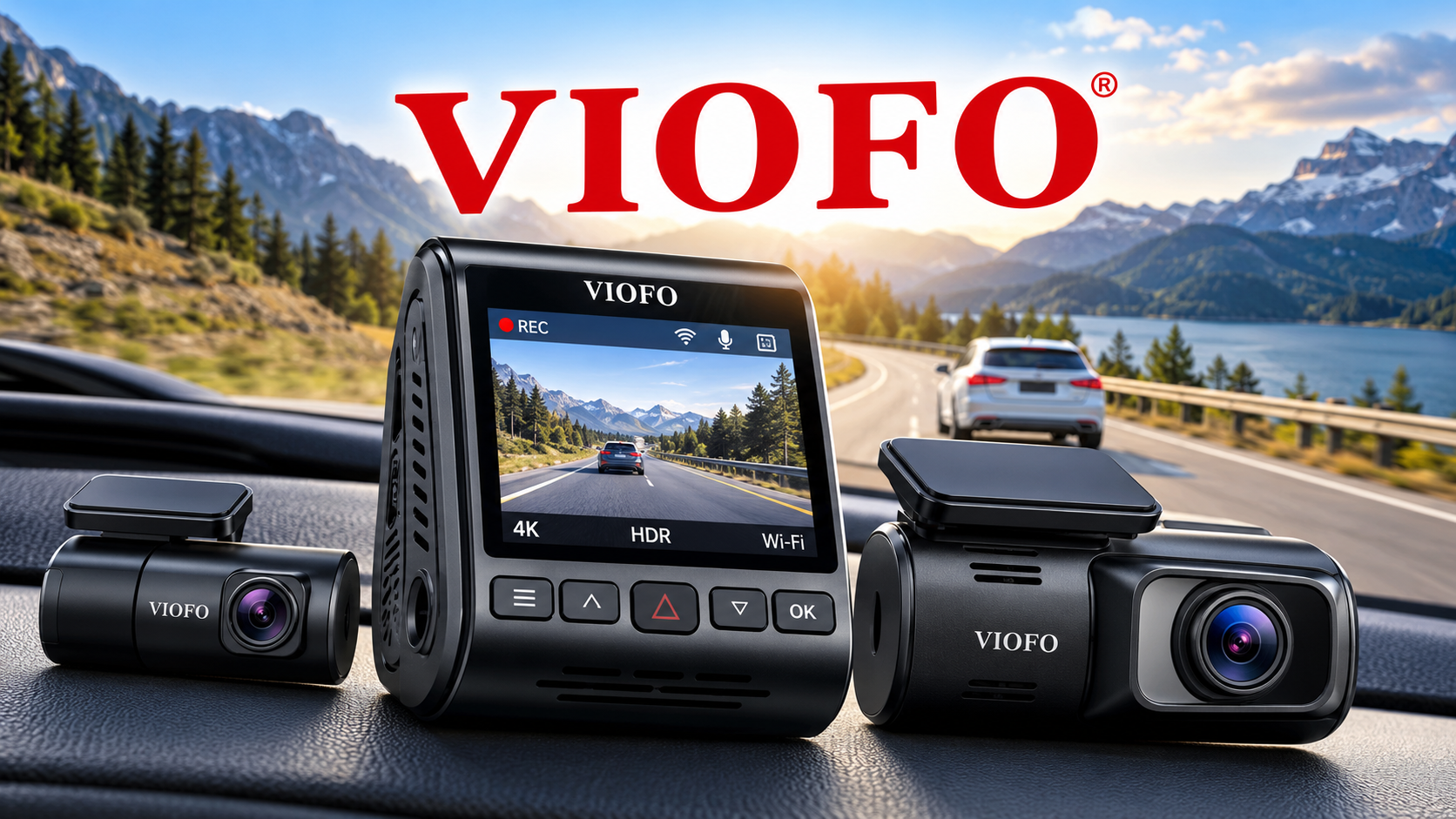
From daily city commutes and cross-country road trips to rideshare shifts and parked vehicle surveillance, a dedicated dash camera provides an objective visual record of unexpected road incidents. Here is how to navigate VIOFO’s Sony STARVIS 2 lineup, compare 1-channel, 2-channel, and 3-channel systems, and choose the right recording setup for your vehicle.
Every driver hopes they will never need dash camera footage. Yet when a sudden lane change, hit-and-run parking scrape, or disputed traffic signal occurs, an objective high-definition video recording can save weeks of insurance friction and hundreds of dollars in deductible disputes. While a dash camera cannot prevent collisions, guarantee that an insurer will accept liability, or replace alert driving, it serves as an indispensable digital eyewitness on modern roads.
Among consumer dash camera manufacturers, VIOFO has earned an industry-leading reputation for optical engineering. Rather than bundling flashy subscription gimmicks or relying on heavily compressed video, VIOFO has consistently led the market in adopting cutting-edge image sensors—most notably Sony’s STARVIS 2 backlit CMOS sensors—pairing them with multi-exposure High Dynamic Range (HDR), heat-resistant supercapacitors, and transparent, subscription-free local storage.
However, choosing between VIOFO’s extensive catalog requires understanding how different channels, sensors, and power accessories match real driving needs. A single-channel front unit like the A119 Mini 2 suits an uncluttered commuter vehicle, whereas rideshare drivers require interior infrared coverage, and commercial trucks often benefit from external waterproof rear lenses or high-speed SSD storage. In this guide, we break down verified technical specifications, evaluate top models, clarify night-recording limitations, and explain practical installation requirements.
Choose Your Dash Cam Setup: 1CH, 2CH, 3CH & Specialized Systems
Before selecting a specific model number, determine how many viewing angles your driving environment genuinely requires. Modern dash cameras are engineered as modular systems categorized by channel count:
Front Camera Only
Best For: Commuters, leased vehicles, first-time dash cam owners, and drivers who want straightforward windshield documentation without routing cables through the headliner to the rear window.
Key Advantage: Fast 15-minute DIY installation directly into a 12V auxiliary socket, minimal windshield obstruction, and the lowest equipment cost.
Trade-off: Zero documentation of rear-end collisions, tailgating behavior, or impacts behind the vehicle.
Front and Rear Recording
Best For: Everyday family cars, highway commuters, and drivers who want comprehensive coverage of traffic both ahead and trailing behind.
Key Advantage: Protects against rear-end collisions, fraudulent bumper claims, and rear parking scrapes. VIOFO’s A229 series pairs a high-resolution 2K Sony STARVIS 2 sensor on the rear unit with advanced HDR.
Trade-off: Requires routing a 20-foot coaxial or USB-C cable along weatherstripping and interior trim panels to the rear glass.
Front, Rear, and Cabin Recording
Best For: Uber, Lyft, taxi, and delivery drivers, parents of teen drivers, and commercial fleet operators requiring passenger cabin documentation.
Key Advantage: An interior infrared (IR) lens illuminates the cabin in pitch darkness with invisible LEDs, documenting unruly passenger disputes, passenger-side window incidents, and driver interactions.
Important Consideration: Cabin recording captures passenger audio and video. Drivers must comply with state and local two-party consent laws, often requiring a small window disclosure decal for commercial rideshare passengers.
Waterproof Rear & Telephoto Setups
Best For: Pickup trucks, cargo vans, convertibles, utility trailers, and drivers prioritizing distant license plate legibility.
Key Advantage: IP67-rated waterproof rear cameras mount externally near the license plate frame for vehicles lacking clear rear glass. Alternatively, forward-facing 4× optical zoom telephoto lenses (e.g. A229 Pro Tele or A329T) focus on narrow fields of view to record license plates from double the distance of wide-angle lenses.
Important Distinction: A telephoto camera faces forward with a narrow ~30° angle and does NOT replace a wide-angle rear camera.
Featured VIOFO Dash Cams: Verified Model Spotlights
Below, we examine six of VIOFO’s current, verified dash camera models. Each review details confirmed optical resolutions, image sensors, practical strengths, limitations, and intended use cases.
1. VIOFO A229 Pro (1CH / 2CH / 3CH)
| Front Camera | 4K UHD (3840×2160p @ 30fps) | Sony STARVIS 2 IMX678 (1/1.8″ 8MP) | F1.8 | 140° FOV |
| Rear Camera (2CH/3CH) | 2K QHD (2560×1440p @ 30fps) | Sony STARVIS 2 IMX675 (1/2.8″ 5MP) | F1.9 | 160° FOV |
| Cabin Camera (3CH) | 1080p FHD (1920×1080p @ 30fps) | Sony IMX307 with 4 Infrared LEDs | 150° FOV |
| HDR & Positioning | Hardware HDR on Front & Rear simultaneously | Quad-Mode GPS (GPS, BEIDOU, GALILEO, GLONASS) |
| Wi-Fi & Storage | Dual-Band 2.4GHz & 5GHz Wi-Fi | MicroSD up to 512GB (High-Endurance recommended) |
| Power & Display | Built-in Supercapacitor | 2.4-inch HD LCD Screen | Voice Control & Voice Notifications |
What Makes the A229 Pro Stand Out:
The A229 Pro represents VIOFO’s optical pinnacle. It is powered by Sony’s 1/1.8-inch 8MP STARVIS 2 IMX678 sensor on the front unit, delivering genuine 4K pixel density that captures roughly 68% more light per pixel than smaller 4K sensors. Crucially, VIOFO paired it with a dedicated 2K Sony STARVIS 2 IMX675 rear camera, solving the historical weakness of dash cams where the rear camera suffered from murky nighttime video. With multi-exposure hardware HDR running on both front and rear units simultaneously, high-beam headlight glare from trailing vehicles is cleanly suppressed without blinding the sensor.
2. VIOFO A229 Plus (1CH / 2CH / 3CH)
| Front Camera | 2K QHD (2560×1440p @ 30fps with HDR / 60fps without HDR) | Sony STARVIS 2 IMX675 (5MP) |
| Rear Camera (2CH/3CH) | 2K QHD (2560×1440p @ 30fps) | Sony STARVIS 2 IMX675 (5MP) | F1.9 | 160° FOV |
| Cabin Camera (3CH) | 1080p FHD (1920×1080p @ 30fps) | Sony IMX307 with 4 Infrared LEDs |
| Key Features | Dual STARVIS 2 HDR, Quad-Mode GPS, 2.4/5GHz Wi-Fi, 2.4″ LCD, Voice Control |
| Storage & Parking | MicroSD up to 512GB | 3 Parking Modes (Auto Event, Time Lapse, Low Bitrate) |
What Makes the A229 Plus Stand Out:
The A229 Plus shares the exact physical shell, screen, Quad-Mode GPS, and rear camera hardware as the flagship A229 Pro, but swaps the 4K front sensor for a 2K Sony STARVIS 2 IMX675 sensor. Because 2K resolution requires lower processing bandwidth and creates smaller file sizes, the A229 Plus runs noticeably cooler and extends microSD storage duration significantly. For drivers who want state-of-the-art STARVIS 2 low-light sensitivity and front-and-rear HDR without the premium price tag of 4K, the A229 Plus represents the best price-to-performance ratio in the lineup.
3. VIOFO A329 / A329S (2CH / Specialized)
| Front Recording | 4K UHD @ 60fps (or 4K @ 30fps with HDR) | Sony STARVIS 2 IMX678 (8MP) |
| Rear Recording | 2K QHD (2560×1440p @ 30fps) | Sony STARVIS 2 IMX675 (5MP) |
| Storage Innovation | Supports External Portable SSD up to 4TB via USB-C + MicroSD slot up to 512GB |
| Connectivity | Wi-Fi 6 (802.11ax, up to 30MB/s transfer) + Micro-HDMI video output port |
| Specialized Options | A329T (with 4× optical telephoto lens) | A329W (with IP67 waterproof exterior rear camera) |
What Makes the A329 Stand Out:
The A329 is engineered for enthusiasts and commercial operators who find traditional dash cam storage and download speeds restrictive. It is the first mainstream dash cam capable of recording smooth 4K at 60 frames per second while writing video directly to an external portable SSD (such as a Samsung T7 or SanDisk Extreme) up to 4TB. With 4TB of capacity, you can record weeks of uncompressed multi-channel driving without overwriting footage. The addition of Wi-Fi 6 enables download speeds up to 30 MB/s—allowing you to transfer a 1GB 4K video clip to your smartphone in seconds—while the built-in Micro HDMI port lets you stream video directly to in-vehicle monitors.
4. VIOFO A119 Mini 2 (1CH)
| Recording Resolution | 2K QHD (2560×1440p @ 60fps or 30fps with HDR) | Sony STARVIS 2 IMX675 (5MP) |
| Lens & Aperture | F1.6 Aperture | 7-Element Glass Lens | 140° Wide Angle Field of View |
| Form Factor & Screen | Ultra-compact car-key footprint (1.8″ × 2.9″ × 1.6″) | 1.5-inch HD LCD display |
| Smart Features | Intelligent Voice Control (hands-free commands) | 5GHz Dual-Band Wi-Fi | GPS in mount |
| Power & Storage | Supercapacitor power supply | MicroSD support up to 512GB |
What Makes the A119 Mini 2 Stand Out:
For drivers who want front-facing road documentation without mounting an imposing brick on their windshield, the A119 Mini 2 is widely celebrated as the best single-channel dash cam on the market. Measuring barely larger than an electronic car key, it hides entirely behind the rearview mirror from the driver’s perspective. Despite its diminutive chassis, VIOFO compromised nothing on hardware: it incorporates the full 5MP Sony STARVIS 2 IMX675 sensor, fast F1.6 optics, 60fps smoothness, and intelligent voice control that lets you lock critical video clips or toggle Wi-Fi hands-free.
5. VIOFO VS1 (1CH Screenless)
| Sensor & Resolution | 2K QHD (2560×1440p @ 30fps with HDR) | Sony STARVIS 2 IMX675 (5MP) | F1.8 | 140° |
| Display & Audio | Screenless stealth design | Voice Notifications & Hands-Free Voice Control |
| Included Accessories | Includes 32GB High-Endurance MicroSD card in box | Pre-installed CPL filter option |
| Connectivity | High-Speed 5GHz Wi-Fi (for rapid smartphone app video review) | Built-in GPS |
What Makes the VIOFO VS1 Stand Out:
The VS1 is VIOFO’s answer to modern drivers who prefer screenless cameras that blend invisibly into OEM vehicle windshield sensors. By eliminating the LCD screen entirely, the VS1 reduces windshield glare and heat buildup while maintaining the full optical prowess of the Sony STARVIS 2 IMX675 sensor and HDR. You interact with the camera via intuitive voice prompts (“Lock the video,” “Turn on Wi-Fi”) and manage settings or review clips through VIOFO’s high-speed 5GHz smartphone app.
6. VIOFO A139 Pro (1CH / 2CH / 3CH)
| Front Resolution | 4K UHD (3840×2160p @ 30fps) | Sony STARVIS 2 IMX678 (8MP) | 140° FOV |
| Rear & Cabin Video | Rear: 1080p FHD (Sony STARVIS) | Cabin: 1080p FHD with 6 Infrared Night LEDs |
| Cable Architecture | Super-slim 2.8mm coaxial interconnect cables (reduces trim bulging during routing) |
| Lens Adjustability | 300° rotating front lens barrel (fits vertical commercial windshields and sloped sedans) |
What Makes the A139 Pro Stand Out:
The A139 Pro made history as the very first dash cam on the global market to introduce Sony’s 4K STARVIS 2 IMX678 sensor. What sets it apart physically is its screenless matte chassis with a 300-degree rotating lens barrel and ultra-slim 2.8mm coaxial cables. Unlike thick USB-C rear cables that can distort tight rubber door weatherstripping or pull down vehicle headliners, the A139 Pro’s needle-thin coaxial wiring glides behind trim panels with zero resistance.
Side-by-Side Model Comparison
Compare verified optical resolutions, image sensors, channel configurations, and parking mode requirements across VIOFO’s core lineup:
| Model | Channels | Front Sensor & Resolution | Rear / Cabin Specs | Main Differentiator | Parking Power | Action |
|---|---|---|---|---|---|---|
| A229 Pro | 1CH / 2CH / 3CH | 4K UHD (Sony STARVIS 2 IMX678) | Rear: 2K STARVIS 2 IMX675 Cabin: 1080p IR |
Dual STARVIS 2 sensors + dual HDR | HK4 Hardwire Kit | View → |
| A229 Plus | 1CH / 2CH / 3CH | 2K QHD (Sony STARVIS 2 IMX675) | Rear: 2K STARVIS 2 IMX675 Cabin: 1080p IR |
High-value 2K+2K dual STARVIS 2 HDR | HK4 Hardwire Kit | View → |
| A329 | 2CH / Special | 4K @ 60fps (STARVIS 2 IMX678) | Rear: 2K STARVIS 2 IMX675 (Optional Tele / Waterproof) |
External SSD up to 4TB, Wi-Fi 6, HDMI | HK4 Hardwire Kit | View → |
| A119 Mini 2 | 1CH (Front) | 2K QHD @ 60fps (STARVIS 2 IMX675) | None (Dedicated 1CH) | Car-key micro size with 1.5″ LCD & Voice | HK4 Hardwire Kit | View → |
| VS1 | 1CH (Front) | 2K QHD @ 30fps HDR (STARVIS 2) | None (Dedicated 1CH) | Screenless hidden cylinder form factor | HK4 Hardwire Kit | View → |
| A139 Pro | 1CH / 2CH / 3CH | 4K UHD (Sony STARVIS 2 IMX678) | Rear: 1080p FHD Cabin: 1080p IR |
2.8mm slim coaxial cables, 300° lens | HK3-C / HK4 Kit | View → |
Understanding the Features That Actually Matter
Dash camera marketing is filled with technical acronyms. Here is an honest breakdown of how these technologies affect real-world video evidence on American roads:
1. Resolution vs. License Plate Reality
A common myth is that buying any 4K dash camera guarantees reading every license plate in every condition. In reality, license plate capture is governed by relative speed, shutter speed, optical lighting, and motion blur. While 4K (3840×2160) provides 4× the pixel density of 1080p—giving you vastly superior digital zoom when examining stationary or slow-moving cars—capturing a reflective plate at a 75 mph relative speed differential on an unlit highway remains challenging for any camera.
2. Sony STARVIS vs. STARVIS 2
Sony’s first-generation STARVIS sensors excelled at boosting overall image gain in near-darkness. However, when car headlights struck the reflective paint of a license plate at night, the sensor frequently suffered from “blown out” white overexposure. Sony STARVIS 2 features approximately 2.5× wider dynamic range and superior near-infrared sensitivity, dramatically curbing headlight flare while maintaining shadow clarity.
3. Multi-Exposure Hardware HDR
True High Dynamic Range (HDR) captures multiple exposures per frame (a short exposure for bright headlights and a longer exposure for dark road shoulders) and merges them in real time. VIOFO’s A229 Pro and Plus models implement true hardware HDR on both front and rear cameras, preserving crisp plate numbers even when a trailing pickup truck with bright LED lights pulls up behind you.
4. Supercapacitors vs. Lithium Batteries
Dash cameras mounted against sun-drenched windshields can easily reach internal temperatures exceeding 140°F (60°C). Traditional lithium-ion batteries swell, degrade, and pose serious fire hazards under sustained heat. VIOFO exclusively utilizes supercapacitors. While supercapacitors only hold enough electrical charge to safely save the current video file when the vehicle turns off, they reliably operate from -4°F to 149°F (-20°C to 65°C) across years of harsh weather.
Parking Mode & Essential Accessories
More than 30% of vehicle property damage occurs while cars are parked in lots, garages, or street spaces. VIOFO cameras feature three intelligent parking surveillance modes:
- Auto Event Detection (Buffered): The camera continuously buffers video in temporary memory. When the G-sensor detects an impact or the visual sensor detects motion, it permanently saves the incident clip, including the 15 seconds prior to the impact.
- Time Lapse Recording: Records continuous footage at 1, 2, 3, 5, or 10 frames per second without audio, compressing hours of parking footage into smooth, high-speed replay files to conserve memory card space.
- Low Bitrate Recording: Records continuous real-time video and audio at a reduced data bitrate, ensuring every single second is documented without gaps.
The Essential Add-On: VIOFO HK4 Hardwire Kit
When you turn off your vehicle’s ignition, standard 12V auxiliary sockets cut power. To operate Parking Mode, you must install the official VIOFO HK4 Hardwire Cable Kit (or HK3-C for older models). The kit taps into your vehicle’s interior fuse box (one constant 12V wire, one accessory switched wire, and one ground).
Built-in Battery Protection: The HK4 kit includes a physical 4-position low-voltage cutoff switch (11.8V, 12.0V, 12.2V, 12.4V). When your car battery voltage drops to the selected threshold during extended parking, the hardwire kit cuts power to the camera completely, ensuring your vehicle always starts reliably the next morning.
High-Endurance MicroSD Cards: Dash cameras continuously write, overwrite, and cycle video data for hours every day. Standard memory cards designed for digital cameras quickly overheat and suffer write-controller failure. Always pair your camera with a High-Endurance card (such as SanDisk Max Endurance, Samsung PRO Endurance, or VIOFO’s official Industrial cards) rated for U3/V30 continuous video recording.
Which VIOFO Dash Cam Should You Choose? Recommendation Profiles
1. The Commuter & First-Time Buyer
Recommended: VIOFO A119 Mini 2
Why: Exceptional 2K 60fps video powered by Sony STARVIS 2, hands-free voice control, and a discreet car-key profile that hides behind your rearview mirror. Unbeatable reliability under $150.
2. Complete Front & Rear Road Protection
Recommended: VIOFO A229 Plus (2CH)
Why: The benchmark dual-camera setup. Features Sony STARVIS 2 sensors on both front and rear units, delivering clean 2K resolution, dual HDR night vision, and moderate file sizes.
3. The 4K Video Quality Enthusiast
Recommended: VIOFO A229 Pro (2CH)
Why: Flagship 4K UHD Sony STARVIS 2 IMX678 front recording combined with a 2K STARVIS 2 rear camera. Offers maximum digital zoom resolution for capturing distant license plates and scenic drives.
4. Rideshare, Taxi & Fleet Drivers
Recommended: VIOFO A229 Pro or Plus (3CH)
Why: Adds an interior cabin camera with 4 infrared LEDs that illuminates passenger seats in complete darkness, providing vital evidence in passenger disputes or vandalism claims.
5. Trucks, Vans & Exterior Mounting
Recommended: VIOFO A329W or A229 Pro with Waterproof Rear
Why: Pickup trucks with vertical rear tailgates or cargo vans lacking rear glass benefit from VIOFO’s IP67-rated waterproof rear camera mounted near the license plate.
6. High-Speed 60fps & Massive SSD Storage
Recommended: VIOFO A329
Why: Silky-smooth 4K 60fps video, external portable SSD support up to 4TB, Wi-Fi 6 downloads, and micro-HDMI output. Ideal for long-haul cross-country road trips.
Practical Installation and Everyday Operation
Installing a VIOFO dash camera is straightforward and requires no specialized mechanic skills. Follow these practical recommendations:
Mounting Position & Windshield Wiper Sweep
Mount the front camera directly behind your rearview mirror on the passenger side. Ensure the lens sits within the swept path of your windshield wipers; otherwise, rain, road salt, and snow will obstruct the lens during storms. Use the electrostatic windshield film included in the box before attaching the 3M adhesive pad to allow residue-free removal if you sell your vehicle.
Routing Around Side-Curtain Airbags
When routing the power cable or rear camera cable down the A-pillar (the windshield pillar), never route cables across the face of side-curtain airbags. Pop the A-pillar plastic trim cover and zip-tie the camera cable securely behind the airbag deployment zone along factory wiring harnesses to ensure airbag safety is completely unimpeded.
Legal Audio Recording & Cabin Privacy
In the United States, audio recording laws vary significantly by state. Twelve states (including California, Florida, and Pennsylvania) enforce “two-party” or “all-party” consent laws, making it unlawful to record private conversations without the consent of all parties. If using a 3-channel cabin camera for rideshare driving, disable audio recording in the menu or post a visible notification decal on the window stating that audio and video recording is active.
VIOFO Brand Strengths and Practical Considerations
Core Brand Strengths
- Industry-Leading Optics: Early adoption of Sony STARVIS 2 sensors (IMX678 & IMX675) with multi-exposure hardware HDR.
- Zero Mandatory Subscriptions: All video is saved locally to standard MicroSD cards or external SSDs without paywalls or monthly cloud fees.
- Supercapacitor Thermal Durability: Heat-resistant power architecture built for extreme summer and winter climates.
- Modular Form Factors: Flexible choice between 1CH, 2CH, 3CH, waterproof rear, and telephoto configurations.
Important Considerations
- No Built-in Cellular LTE Cloud: VIOFO cameras rely on Wi-Fi and local storage; they do not send remote live-streaming push notifications to your phone when you are away from the vehicle.
- Hardwire Installation Required for Parking: Automated 24/7 parking mode requires installing the optional HK4 hardwire kit to the fuse box.
- High-Endurance Cards Required: High-bitrate 4K HDR streams require certified U3/V30 memory cards.
Frequently Asked Questions About VIOFO Dash Cams
What is the primary difference between the VIOFO A229 Pro and A229 Plus?
The main difference is front-camera resolution and sensor size. The A229 Pro features a true 4K UHD front camera using the flagship 8MP Sony STARVIS 2 IMX678 sensor. The A229 Plus uses a 2K QHD front camera with the 5MP Sony STARVIS 2 IMX675 sensor. Both models share the exact same 2K Sony STARVIS 2 rear camera, GPS module, display screen, and software features.
Is a 4K dash camera always better than a 2K model?
4K provides significantly more digital cropping zoom for examining stationary vehicle plates and fine road details. However, 2K models with STARVIS 2 sensors (like the A229 Plus or A119 Mini 2) run cooler, require less storage capacity, and provide comparable nighttime low-light sensitivity at a noticeably lower price point.
Does VIOFO parking mode require a hardwire kit?
Yes. When your vehicle’s ignition is turned off, standard 12V cigarette lighter sockets power down. To enable 24/7 buffered parking mode, time lapse, or low bitrate recording, you must install the official VIOFO HK4 hardwire cable kit, which connects to your fuse box and protects your car battery from draining with configurable voltage cutoff switches.
Which memory card should I use with a VIOFO dash cam?
Always choose a certified High-Endurance card (such as SanDisk Max Endurance, Samsung PRO Endurance, or VIOFO’s official Industrial cards) with a U3/V30 speed rating. Standard consumer microSD cards are not designed for the continuous write cycles of high-bitrate multi-channel dash cams and will quickly fail.
Can I record the front, rear, and cabin simultaneously?
Yes, if you select a 3-Channel (3CH) configuration such as the VIOFO A229 Pro 3CH, A229 Plus 3CH, or A139 Pro 3CH. The camera simultaneously records three synchronized video files to the memory card.
What is the difference between a waterproof rear camera and a standard rear camera?
A standard rear camera mounts inside your vehicle against the interior rear glass. An IP67 waterproof rear camera (such as VIOFO’s RWC200 or RWC400) is hermetically sealed with a hydrophobic lens coating to mount externally near your license plate, making it ideal for pickup trucks, vans, and convertibles lacking clear rear windows.
Does VIOFO offer external SSD support?
Yes, the flagship VIOFO A329 natively supports external portable SSDs (such as Samsung T7 or SanDisk Extreme) up to 4TB via an ultra-slim USB-C data cable, allowing weeks of continuous 4K 60fps recording without overwriting older files.
Final Recommendation: Selecting the Right VIOFO Setup
Choosing the right dash camera comes down to matching channel coverage with your specific vehicle layout and driving habits:
- For the absolute highest 4K video quality and dual STARVIS 2 HDR: Invest in the VIOFO A229 Pro (2CH or 3CH).
- For the best value 2K front-and-rear road coverage: Choose the VIOFO A229 Plus (2CH).
- For extreme 4K 60fps performance and massive 4TB SSD storage: Select the flagship VIOFO A329.
- For unobtrusive, stealthy single-channel front protection: Choose the pocket-sized VIOFO A119 Mini 2.
- For rideshare, taxi, and commercial passenger accountability: Select any 3-Channel (3CH) system.
Explore Verified VIOFO Dash Cams & Bundles
Review current model specifications, hardwire kit bundles, and verified configurations directly on the official store:
Explore VIOFO Dash Cams →