Late-night smartphone shopping often brings the same dilemma: modern flagships are impressive, but steep price tags induce instant buyer’s remorse. When your current phone suffers from poor battery life or sluggish performance, upgrading feels urgent. Yet spending a thousand dollars or more on a new handset rarely feels sensible.
This is where the refurbished market shines. Offering flagship Apple hardware at discounts reaching up to 70% off original retail prices, renewed iPhones have become a go-to choice for savvy buyers. Even so, many shoppers hesitate. What does \”refurbished\” truly mean? Is it merely a disguised term for a scratched second-hand phone, or does it deliver genuine value and long-term reliability?
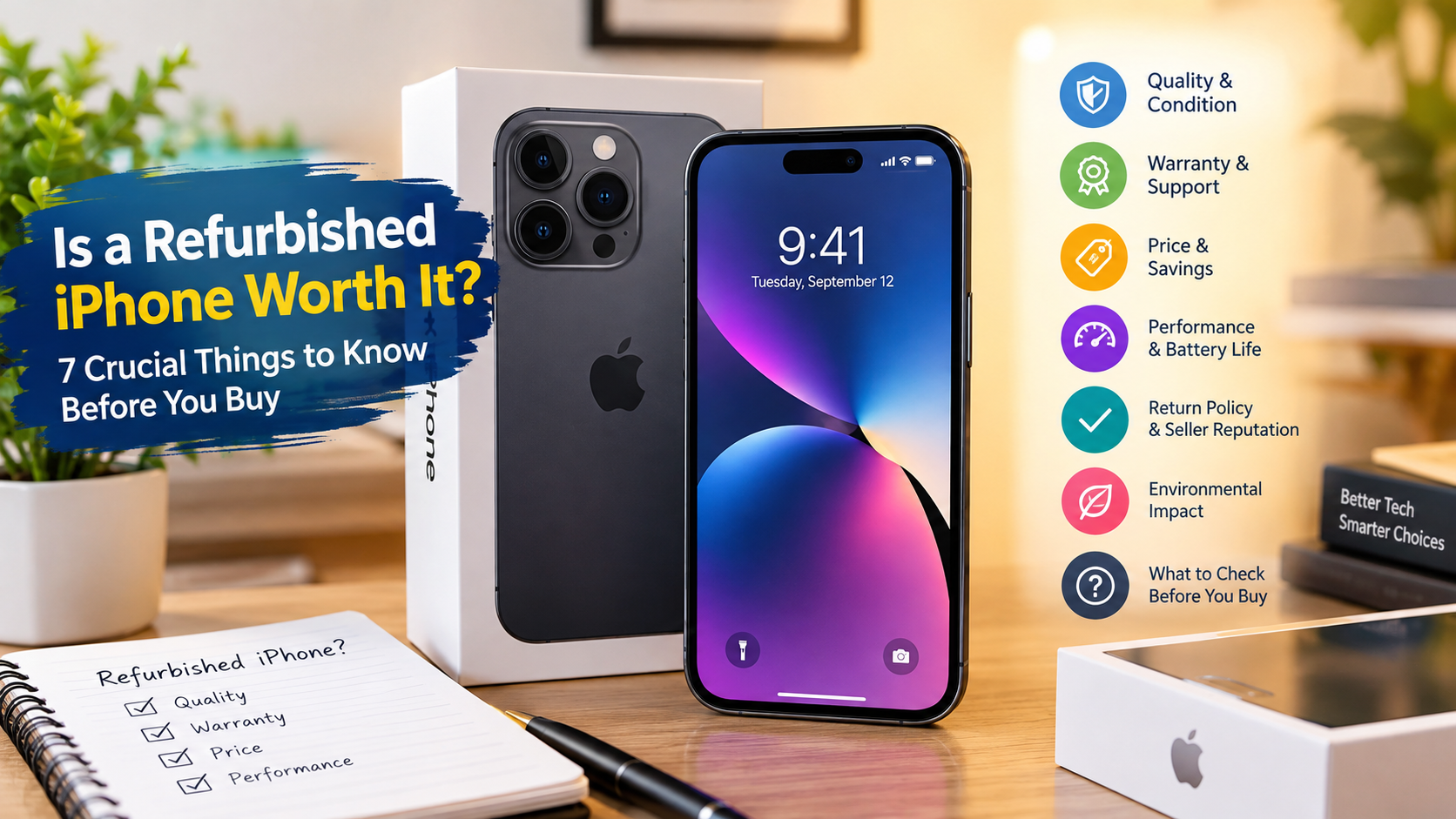
In reality, a certified refurbished iPhone is a pre-owned device that has undergone thorough testing, expert repairs, deep cleaning, and factory data wiping before repackaging. Here are seven crucial things you need to know before buying.
1. Substantial Cost Savings Without Compromise
The main reason to choose refurbished tech is substantial financial relief. Brand-new flagship phones arrive with eye-watering price tags. Yet consumer electronics depreciate rapidly during their first couple of years, even though Apple’s processors remain fast for half a decade.
When purchasing from established refurbishment specialists like Back Market, shoppers regularly secure recent iPhone models at 30% to 70% below original retail prices. That difference translates to hundreds of dollars staying in your pocket.
Instead of stretching your budget for an entry-level new phone with minimal storage, those savings allow you to buy a premium Pro model from a recent generation. You gain superior cameras, premium chassis materials, and double the storage capacity for less money. The leftover cash easily covers protective cases, screen protectors, and fast chargers.
2. Certified Refurbished vs. Standard Used Phones
It is vital to distinguish between a standard used phone from a private seller and a certified refurbished device. Buying from peer-to-peer marketplaces is a gamble with no guarantees regarding past liquid damage or unpaid carrier balances.
In contrast, a certified refurbished iPhone undergoes a strict multi-point diagnostic inspection conducted by qualified technicians. Key testing checkpoints include:
- Core Hardware: Complete verification of the logic board, cellular antennas, Wi-Fi, Bluetooth, Face ID, and biometric sensors.
- Display Quality: Detailed testing for dead pixels, touch responsiveness, True Tone calibration, and backlight consistency.
- Audio Performance: Acoustic frequency testing of earpieces, external speakers, and microphones.
- Data Eradication: Permanent data wiping to purge prior accounts, paired with thorough sanitization.
Choosing certified refurbishment replaces private-seller risks with verified reliability and clear return avenues.
3. Demystifying Battery Health and Longevity
Battery endurance is often the biggest hesitation for prospective buyers. Lithium-ion batteries naturally lose maximum capacity over hundreds of recharge cycles. Fortunately, the refurbished market operates with clear battery standards to protect consumers.
Under Apple diagnostic standards, a battery capacity at or above 80% delivers peak processing performance without unexpected shutdowns. Trusted refurbishers guarantee that phones arrive with at least 80% to 85% battery health, providing dependable all-day stamina under regular daily use.
Additionally, many listings explicitly offer units equipped with brand-new, zero-cycle replacement batteries. Real customer reviews frequently highlight handsets arriving with 95% to 100% capacity. Even if you purchase a device with 85% health, Apple and authorized repair providers offer affordable battery replacements that can refresh your device down the road.
4. Decoding Cosmetic Condition Grades
When shopping for refurbished iPhones, you will encounter standard condition tiers such as Fair, Good, Excellent, and Premium. Understanding these labels helps align your expectations with your budget:
- Fair: The most affordable tier. Shows visible cosmetic wear like surface scratches, but all internal hardware works flawlessly.
- Good: Features minor scratches on the frame or glass that disappear once fitted with a protective case.
- Excellent: Displays barely any visible wear, featuring clean screen glass and an immaculate frame.
- Premium: The highest tier available, looking virtually indistinguishable from a brand-new phone straight out of the box.
Remember that cosmetic grades only describe external appearance. A Fair-grade model delivers the exact same processor speeds, camera capabilities, and software fluidity as a Premium model. Putting an inexpensive opaque case on a Fair or Good phone unlocks massive savings without aesthetic compromises.
5. Warranties, Return Policies, and Buyer Protection
The true advantage of choosing certified refurbished platforms over private sellers is consumer protection. Trustworthy retailers stand behind their products with commercial safeguards that mirror retail purchases.
Leading platforms provide an included 12-month hardware warranty. If a button fails, a camera module malfunctions, or an internal board develops an unexpected defect, the seller repairs or replaces the unit without dispute. Many top-tier sellers also feature express replacement programs, dispatching a replacement phone immediately so you are never left without a device.
Furthermore, standard 30-day money-back return windows allow you to test signal reception, battery life, and cameras during your daily routine. If the handset fails to meet your expectations, returning it is simple and hassle-free. Combined with secure payment options and installment plans, purchasing refurbished is remarkably safe.
6. Choosing the Right Model and Specifications
Because Apple designs custom processors and supports devices with software updates for up to seven years, you do not need the newest release to enjoy a premium experience. When selecting your model, consider these key factors:
- Software Longevity: Modern operating systems support iPhones dating back several generations. Devices like the iPhone 13, 14, or 15 series provide fast speeds, advanced security patches, and full feature compatibility well through 2026, 2028, and beyond.
- Storage Needs: High-resolution photos, 4K video recording, and modern apps demand ample local storage. Skip 64GB options and target 128GB or 256GB models to ensure comfortable everyday headroom.
- Base vs. Pro Models: If you value mobile photography or video production, a refurbished Pro model delivers telephoto lenses, LiDAR depth sensing, and 120Hz ProMotion displays at the price of a standard retail baseline device.
Focusing on your actual feature requirements ensures you do not overpay for hardware you rarely utilize.
7. Environmental Advantages and Sustainable Tech
Choosing refurbished tech does more than protect your wallet—it directly benefits the environment. Smartphone manufacturing ranks among the most resource-heavy consumer industries in the world.
Producing a brand-new smartphone generates roughly 70 to 80 kilograms of carbon emissions while consuming rare earth minerals, precious metals, and clean water. Opting for a refurbished iPhone prolongs the practical lifespan of high-grade manufactured electronics, keeping toxic e-waste out of landfills.
Certified B Corp platforms and responsible tech marketplaces actively champion circular electronic lifecycles. Many platforms also offer generous trade-in programs, providing cash or credit for your outdated handset while recycling older components properly. Upgrading to a renewed smartphone is an effortless way to reduce your environmental footprint without giving up modern capabilities.
Frequently Asked Questions About Refurbished iPhones
Is a refurbished iPhone as durable as a new one?
Yes. Certified refurbished iPhones use original Apple components or certified equivalent parts. Because each unit undergoes thorough technician testing, reliability is comparable to brand-new units, and any unforeseen defect is covered under warranty.
Will my refurbished iPhone receive the latest iOS updates?
Absolutely. Refurbished iPhones run official iOS operating systems without modification. As long as Apple supports the model generation, you receive every official feature update, security patch, and App Store compatibility update seamlessly.
Can I choose a phone with a brand-new battery?
Yes. Many reputable refurbishers offer listings specifically tagged with new battery installations. Furthermore, all certified units are guaranteed to meet or exceed an 80% battery health threshold.
Are refurbished iPhones carrier unlocked?
Most refurbished iPhones are sold factory unlocked, allowing you to use physical SIMs or eSIMs with any mobile carrier across the globe. Always verify the network status on the specific product listing before checkout.
Final Verdict: Should You Buy a Refurbished iPhone?
When evaluating major savings, rigorous testing, dependable battery health, 12-month warranties, and environmental benefits, buying a refurbished iPhone is indisputably worth it. It delivers Apple’s premium ecosystem, stellar cameras, and durable design without retail markup.
By buying from trusted platforms like Back Market and selecting your ideal grade and storage, you can upgrade with complete peace of mind while supporting sustainable tech.