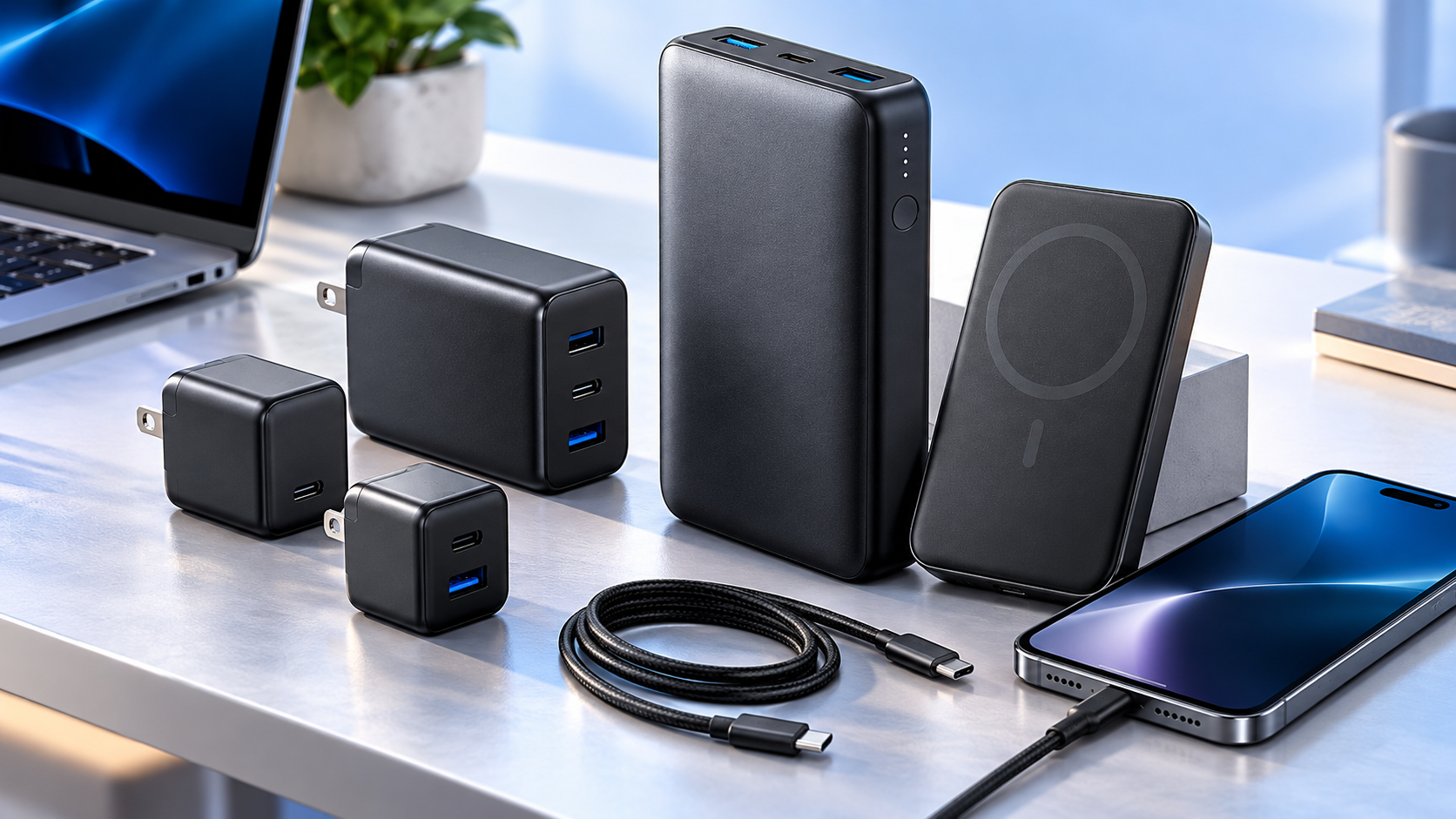
In an era where daily productivity spans smartphones, wireless earbuds, high-resolution tablets, smartwatches, and power-hungry laptops, the modern workday is fundamentally tethered to battery life. Nothing slows a productive morning or derails an international flight faster than the dreaded low-battery warning on an airplane with broken seatback outlets, or an airport waiting area packed four-deep around a dead wall socket. Keeping digital gear energized throughout long commutes, client meetings, and remote work sessions is no longer merely about carrying extra cables—it requires matching your devices with chargers and power banks capable of delivering the right wattage, safe thermal regulation, and seamless multi-device power distribution.
Anker has grown from an early pioneer of reliable replacement batteries into the global benchmark for modern charging technology. By replacing bulky silicon transformers with compact Gallium Nitride (GaN) semiconductors, introducing USB-C Power Delivery 3.1 capable of delivering up to 140W to power workstation-class laptops, and implementing official Qi2 certified 15W magnetic wireless charging, Anker has engineered a cohesive power ecosystem. But because charging speed depends on dynamic port power allocation, cable ratings, and device thermal thresholds, finding the ideal power gear requires looking past marketing slogans and examining real-world specifications.
Quick Product Finder: Charging Personas
Rather than browsing through dozens of similar-looking black rectangles, start by identifying your primary charging environment:
✈️ The Road Warrior & Power Nomad
Needs massive wattage to recharge a 16″ MacBook Pro and phone mid-flight without an AC outlet. Top Pick: Anker Prime 27,650mAh (250W).
💼 The Minimalist Business Commuter
Replaces multiple proprietary wall bricks with one compact pocketable charger for laptop and phone. Top Pick: Anker Prime 100W GaN Wall Charger.
🖥️ The Executive Desktop Command
Powers two workstation laptops, a tablet, and desk accessories from a single central outlet. Top Pick: Anker Prime 240W Desktop Charger.
🍎 The Apple Ecosystem Traveler
Wants a single folding stand to charge iPhone (Qi2 15W), Apple Watch, and AirPods simultaneously on a hotel nightstand. Top Pick: Anker MagGo 3-in-1 Charging Station.
🏃 Everyday Carry & Phone Top-Ups
Requires an ultra-portable magnetic snap-on pack with real-time battery readout. Top Pick: Anker MagGo 10,000mAh Power Bank.
🎒 Pocket-Sized Daily Plug
A thumb-sized 30W GaN plug that fast-charges phones and tablets at full speed. Top Pick: Anker Nano 30W Wall Charger.
Charging Technology Explained: The Pocket Power Primer
Modern charging is governed by electrical protocols, dynamic handshakes, and semiconductor physics. Understanding these core principles ensures you buy equipment that delivers optimal charging speeds without overheating your hardware:
1. GaN (Gallium Nitride) vs. Legacy Silicon
For decades, power adapters relied on silicon semiconductors. Silicon conducts electricity effectively, but generates significant heat and requires bulky internal heat sinks, resulting in the heavy, brick-like chargers of the past. Gallium Nitride (GaN) is a wide-bandgap semiconductor that conducts electrical currents up to 1,000 times more efficiently than silicon. Because GaN switches power faster and wastes far less energy as heat, internal components can be packed tightly together. This allows Anker to build 100W multi-port chargers that are up to 50% smaller than older single-port 96W laptop bricks while maintaining lower surface temperatures.
2. USB-C Power Delivery (PD 3.0 vs. PD 3.1) & PPS
USB Power Delivery is the universal communication protocol that negotiates voltage and amperage between charger and device. While standard PD 3.0 maxes out at 100W (20V at 5A), the newer PD 3.1 Extended Power Range (EPR) standard allows voltages up to 28V at 5A, unlocking up to 140W over a single USB-C cable. This 140W ceiling is required to fast-charge 16-inch MacBook Pros (0 to 50% in approximately 28 minutes). Furthermore, PPS (Programmable Power Supply) dynamically micro-adjusts voltage in 20mV increments to match your smartphone’s battery state, which is mandatory to trigger “Super Fast Charging 2.0” (45W) on Samsung Galaxy flagships.
3. Qi2 Wireless Charging: The 15W Magnetic Leap
In earlier wireless charging generations, standard Qi pads were limited to a slow 7.5W on iPhones unless the manufacturer paid for proprietary Apple MagSafe certification. The new Qi2 standard (developed by the Wireless Power Consortium with Apple’s direct contribution) standardizes the Magnetic Power Profile across both iOS and Android. Anker Qi2 chargers deliver a genuine 15W wireless fast-charging rate with magnetic alignment, cutting wireless charging times roughly in half compared to legacy 7.5W Qi pads.
4. Dynamic Port Power Distribution
A multi-port charger advertised as “100W” does not deliver 100W out of every port simultaneously. When you plug in one device, a single USB-C port can provide the full 100W. But the moment you connect a second device, the internal controller splits the power budget—typically into 65W for your laptop and 35W for your phone. If three devices are plugged in, power may re-balance to 46W + 30W + 22.5W. Understanding these dynamic profiles ensures your laptop doesn’t suddenly drop into slow-charging mode when you plug in your smartwatch.
5. Power Bank Capacity: Rated mAh vs. Real-World Wh
Power bank capacity is traditionally printed in milliamp-hours (mAh), which measures raw battery cell capacity at 3.7V. However, smartphones and laptops charge at 5V, 9V, 15V, or 20V. During voltage up-conversion and battery resistance, energy is lost as heat, meaning a 20,000mAh power bank typically delivers roughly 65% to 75% of its rated capacity to connected devices. When assessing flight legality, the Federal Aviation Administration (FAA) and TSA evaluate Watt-hours (Wh), not mAh. The strict airline carry-on limit is 100Wh. Anker purposefully rates its flagship Prime power bank at 99.54Wh, guaranteeing it passes airport security checkpoints without requiring special airline approval.
Featured Product Spotlights: Tailored Power Engineering
Each Anker series is designed with a specific operational priority in mind. Below, we break down the standout products using varied technical profiles and real-world usage scenarios.
Anker Prime 27,650mAh Power Bank (250W) — Model A1340
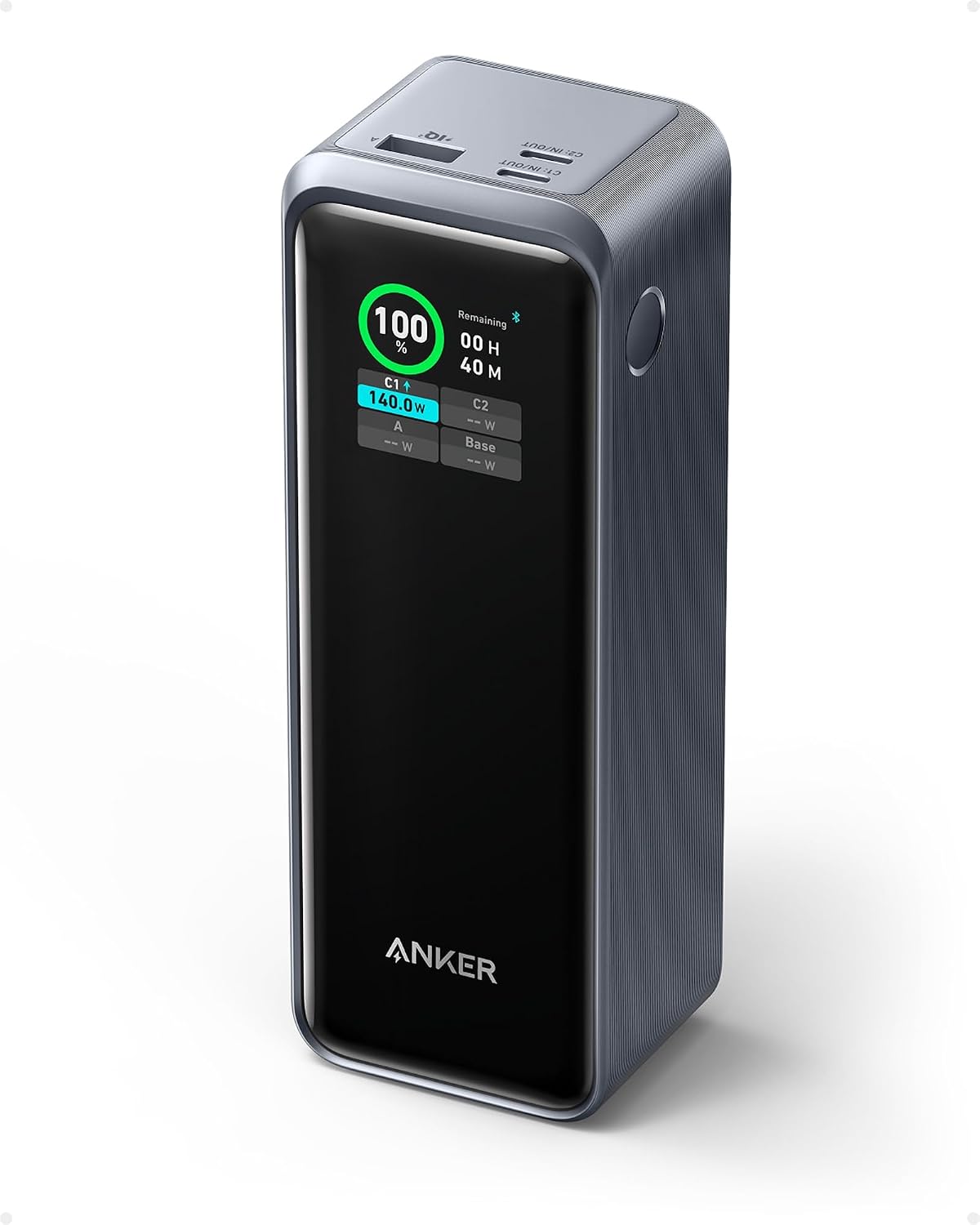
The pinnacle of portable energy density, the Anker Prime 27,650mAh packs 250W of multi-device output and dual 140W PD 3.1 ports into a sleek, soda-can-sized tower with a full-color smart digital display.
Anker Prime 240W GaN Desktop Charger (4-Port)
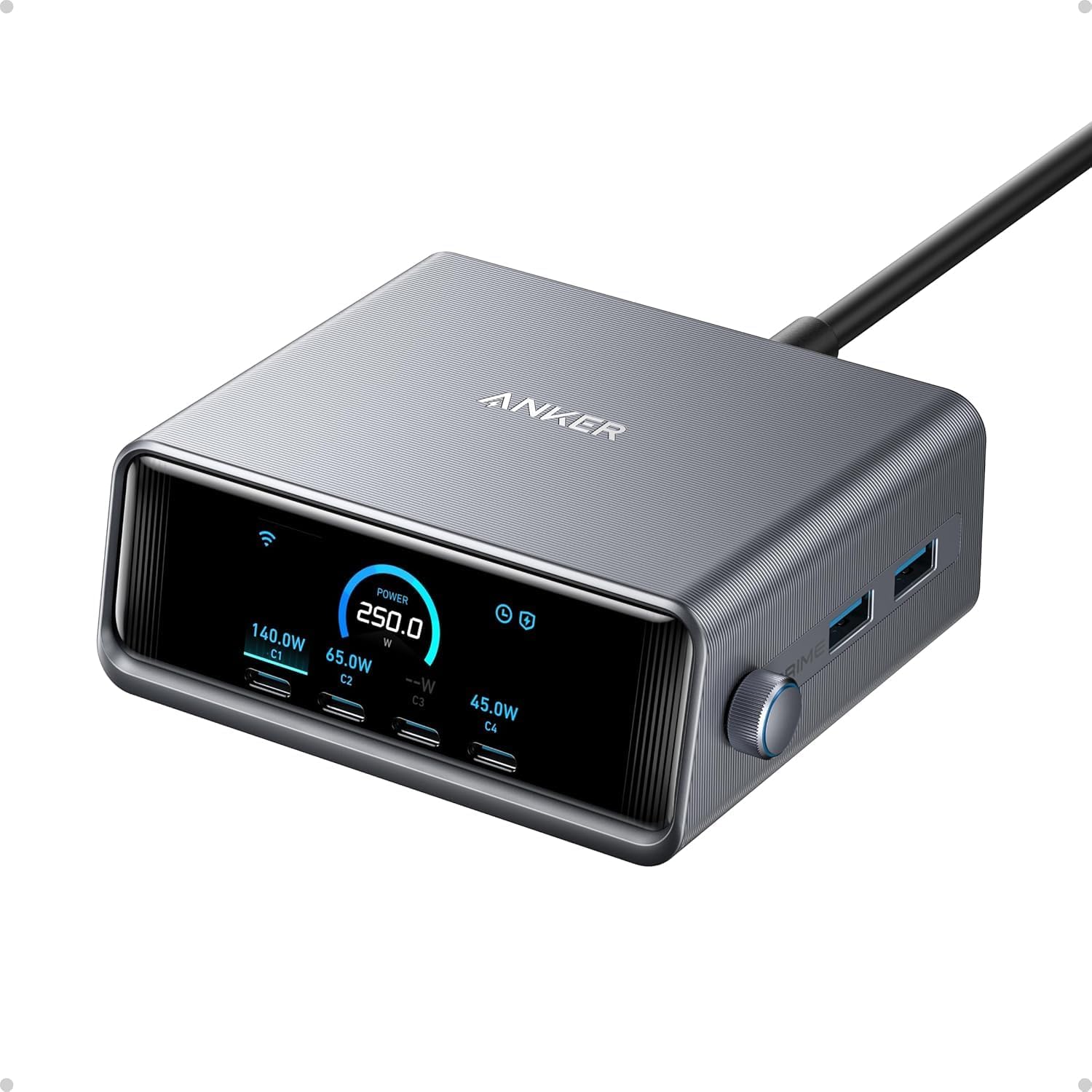
Engineered to replace a rat’s nest of proprietary power supplies, this compact desktop powerhouse channels 240W of total GaN power across four USB-C ports, capable of running two laptops at full velocity simultaneously.
Anker Prime 100W GaN Wall Charger (3-Port) — Model A2343
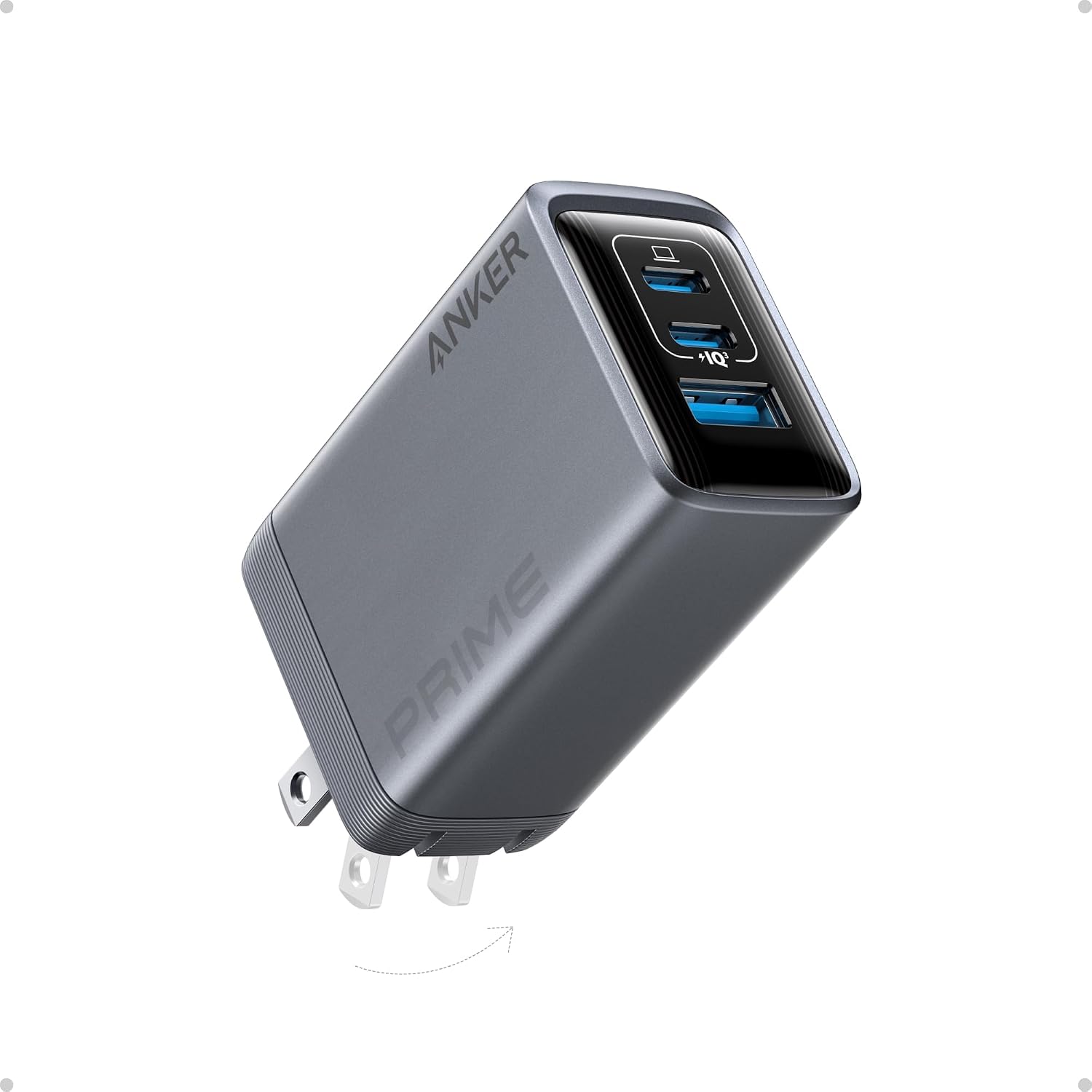
The definitive one-plug travel solution. Approximately 45% smaller than Apple’s single-port 96W brick, this charger features foldable prongs and three ports to recharge your laptop, phone, and earbuds at once.
Anker MagGo 3-in-1 Wireless Charging Station (Foldable Qi2)
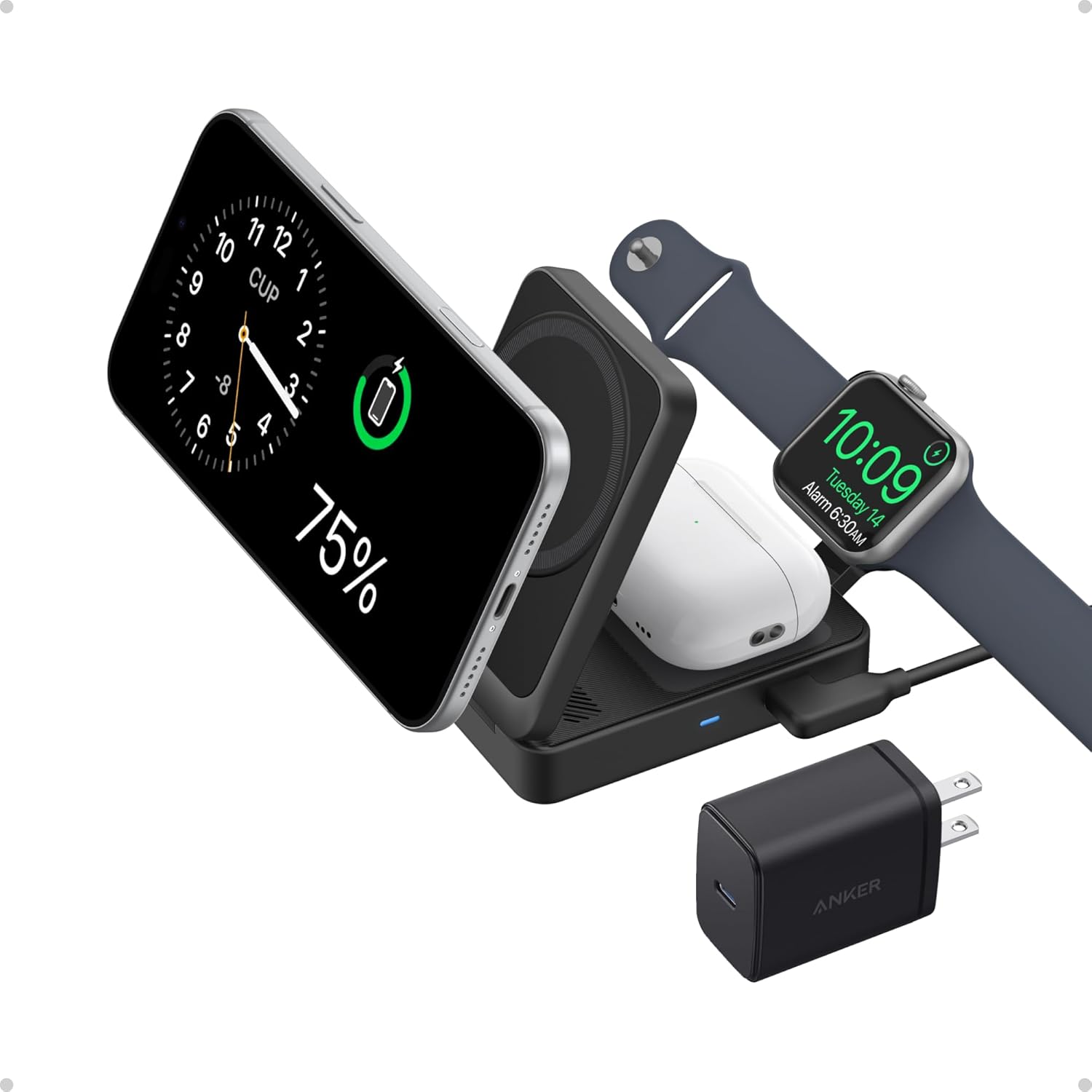
A masterclass in foldable travel engineering. Built around the official Qi2 standard, this origami-style magnetic charging puck opens into a multi-device stand for your iPhone, Apple Watch, and AirPods.
Anker MagGo Power Bank (10,000mAh, Qi2 15W) — Model A1654
The ultimate cordless companion for mobile smartphone power. Combining certified 15W Qi2 wireless output, a 27W bidirectional USB-C port, a fold-out zinc alloy kickstand, and a side-mounted LCD battery display.
Anker Nano 30W GaN Wall Charger — Model A2146
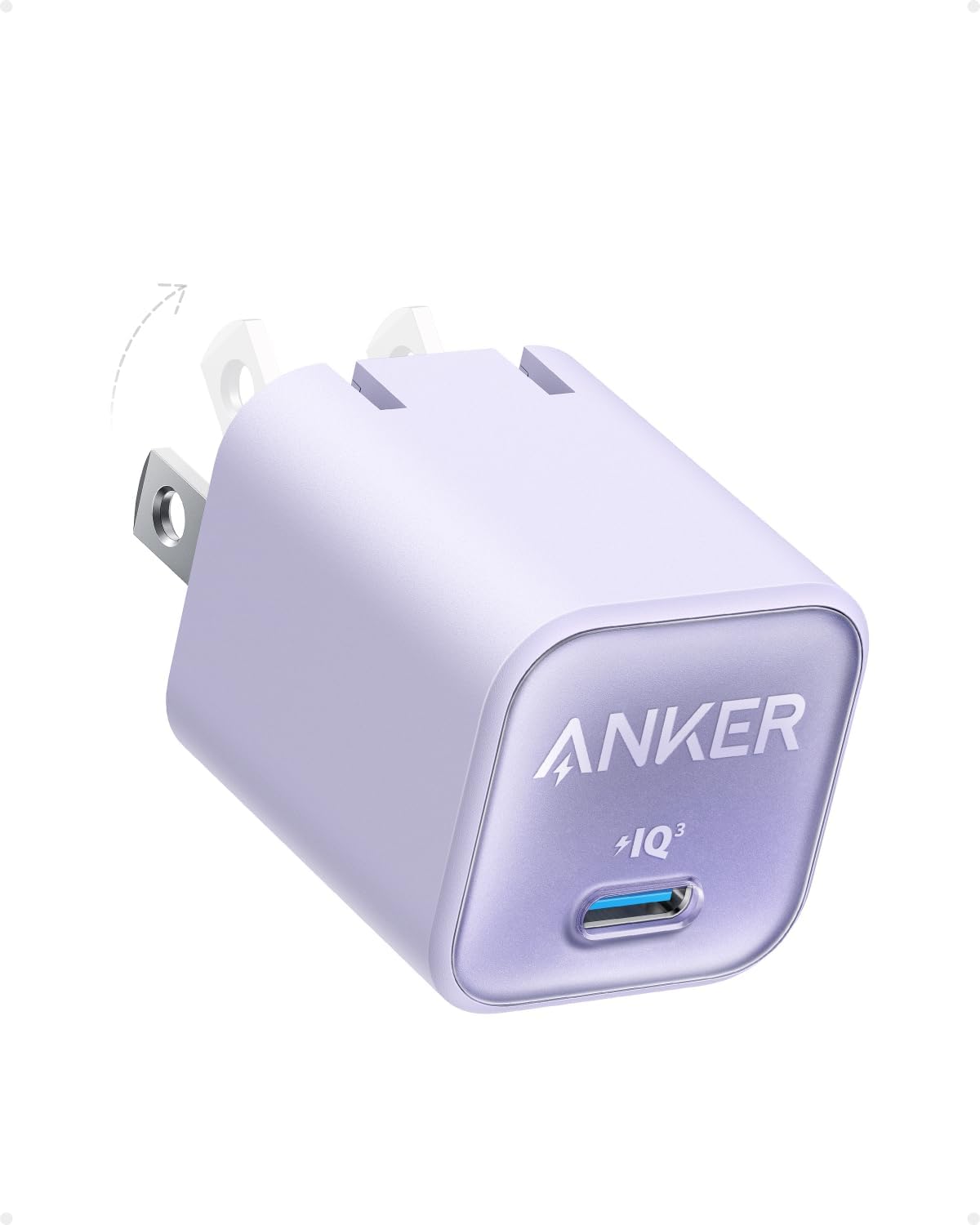
Downsized to the exact dimensions of legacy 5W phone cubes, this GaN II charger unleashes 30W of USB-C Power Delivery, capable of taking an iPhone from 0 to 50% in under 30 minutes, or running an iPad Air and MacBook Air at full rated speed.
Choose the Right Anker Product: The Decision Framework
To avoid overpaying for unnecessary wattage or buying a charger that underpowers your laptop, evaluate these five critical purchasing factors:
- Verify Your Largest Device’s True Input Wattage: A smartphone only needs 20W to 30W, an iPad Air requires 30W, an ultraportable 13″ laptop needs 45W to 65W, and a heavy-duty 16″ workstation laptop requires 100W to 140W. Always size your charger’s single-port ceiling to your largest device.
- Check Dynamic Multi-Port Splits: If you plan to charge a 65W laptop while simultaneously charging your phone, buy a charger rated for at least 100W (which splits 65W + 35W). A 65W multi-port charger will drop your laptop down to 45W when a second cable is connected.
- Examine Cable Ratings: A 140W charger plugged into a standard 60W USB-C cable will cap charging at 60W. To achieve 100W to 140W throughput, you must use a certified USB-C cable equipped with an internal e-Marker chip rated for 100W or 240W.
- TSA & Flight Carry-on Compliance: If you travel by air, power banks must remain in your carry-on luggage (never checked baggage) and must not exceed 100Wh. Both the Anker Prime 27,650mAh (99.54Wh) and Anker 737 (86.4Wh) are strictly compliant.
- Wireless Convenience vs. Thermal Speed: Qi2 magnetic wireless charging (15W) is ideal for bedside stands and casual desk top-ups. However, wired USB-C charging (27W–140W) remains significantly faster and generates less ambient battery heat.
At-a-Glance Comparison: Verified Specifications
Compare the exact technical profiles of the featured Anker power products below:
| Product Model | Type | Max Output | Capacity / Ports | Key Technology | Best Use Case | Shop |
|---|---|---|---|---|---|---|
| Anker Prime 27,650mAh | Power Bank | 250W (140W Port) | 27,650mAh (99.54Wh) | PD 3.1, Smart LCD Screen, App | Laptop Road Warriors & Flights | View on Amazon → |
| Anker 737 (PowerCore 24K) | Power Bank | 140W Two-Way | 24,000mAh (86.4Wh) | PD 3.1, Smart Digital Display | High-Speed Laptop Backup | View on Amazon → |
| Anker Prime 240W Desktop | Desktop Charger | 240W Total | 4× USB-C Ports | 140W PD 3.1, GaN, ActiveShield 2.0 | Dual-Laptop Workstation Desks | View on Amazon → |
| Anker Prime 100W GaN | Wall Charger | 100W Max | 2× USB-C + 1× USB-A | GaN III, Foldable Prongs, PPS | All-in-One Commuter & Hotel Bag | View on Amazon → |
| Anker MagGo 3-in-1 Foldable | Wireless Station | 15W Qi2 + Watch | 3 Wireless Coils | Certified Qi2 15W, Watch Fast Charge | Nightstand & Apple Travel Kit | View on Amazon → |
| Anker MagGo 10,000mAh | Magnetic Power Bank | 15W Qi2 / 27W USB-C | 10,000mAh | Qi2 15W, Smart Display, Kickstand | On-the-go iPhone Stand & Power | View on Amazon → |
| Anker Nano 30W GaN | Mini Wall Charger | 30W Max | 1× USB-C Port | GaN II, PIQ 3.0, PPS (33W peak) | Pocket EDC & MacBook Air/iPad | View on Amazon → |
Real-World Buying Scenarios
To see how these power solutions integrate into everyday life, consider these four common tech setups:
The Single-Device Smartphone User
If your daily power needs revolve strictly around an iPhone 16/15 or Samsung Galaxy, you do not need a bulky multi-port adapter. Pairing the thumb-sized Anker Nano 30W wall plug with the magnetic Anker MagGo 10,000mAh power bank gives you maximum wired charging speed at home and effortless 15W magnetic cable-free power while commuting.
The Hybrid Laptop & Tablet Worker
Professionals carrying a work laptop (such as a MacBook Pro or ThinkPad) alongside a tablet and smartphone should replace their OEM laptop power brick with the Anker Prime 100W GaN Wall Charger. It charges your laptop at 65W while simultaneously providing 35W to your phone, cutting total bag weight and eliminating charger clutter.
The Frequent Flyer & International Traveler
Frequent travelers encounter airplanes without working seat power and hotels with inconvenient wall sockets. Packing the Anker Prime 27,650mAh (99.54Wh) power bank guarantees two full charges for your laptop mid-flight, while the foldable Anker MagGo 3-in-1 powers your phone, watch, and earbuds on hotel nightstands from a single plug.
The High-Power Home Office & Creative Studio
Content creators and developers operating dual laptops, high-resolution drawing tablets, cameras, and accessories need dedicated desktop power. The Anker Prime 240W Desktop Charger delivers dedicated 140W power to a primary editing laptop while simultaneously powering three additional high-draw devices from one clean desk module.
Frequently Asked Questions About Anker Gear
Will a 100W or 140W charger damage my smartphone?
No. USB Power Delivery operates on an active digital handshake. The connected smartphone requests only the exact voltage and amperage it is engineered to accept (typically 20W to 30W max). The charger will never push more wattage than your device requests.
What is the difference between Qi2 and Apple MagSafe?
Qi2 is the open industry standard built upon Apple’s Magnetic Power Profile. Both deliver 15W wireless charging to compatible iPhones with magnetic alignment. The advantage of Qi2 is broad cross-platform interoperability across upcoming Android flagships without paying exclusive proprietary licensing premiums.
Why does my laptop charge slowly when I plug in my phone?
Multi-port chargers feature dynamic power management. When a second cable is connected, the charger briefly renegotiates power, splitting its total wattage budget (for example, dropping a 100W single port down to a 65W + 35W split). Always connect your laptop to Port 1 (USB-C1) to receive the highest wattage allocation.
Can I take the Anker Prime 27,650mAh power bank on an airplane?
Yes. The FAA and TSA enforce a strict 100Wh limit for lithium-ion batteries in carry-on luggage. Anker specifically engineered this model to measure 99.54Wh, making it legally permissible in carry-on bags on commercial flights without airline pre-clearance.
Do I need a special cable to charge at 140W?
Yes. Standard USB-C cables are electronically capped at 60W (3A). To achieve charging speeds between 100W and 140W, you must use a certified USB-C cable equipped with an e-Marker chip rated for 100W (5A) or 240W (PD 3.1 Extended Power Range).
Final Recommendations: Match Power to Your Purpose
There is no single “best” charger for every individual because power demands vary drastically based on your hardware ecosystem and daily routine. Selecting the right Anker equipment comes down to matching form factor and wattage to your primary friction point:
- If you need uncompromising battery backup for heavy laptop work anywhere on earth, the Anker Prime 27,650mAh (250W) is the undisputed leader in portable energy density and real-time screen telemetry.
- If you want one single, compact adapter to lighten your daily work bag, the Anker Prime 100W GaN Wall Charger effortlessly handles your laptop and phone simultaneously.
- If you desire effortless, wire-free nightstand organization for your Apple ecosystem, the foldable Anker MagGo 3-in-1 (Qi2) eliminates cable clutter with high-speed 15W magnetic convenience.
- If you want the smallest possible fast-charging plug for your pocket, the thumb-sized Anker Nano 30W delivers maximum smartphone charging velocity in minimum space.
Review the charging wattages of your daily devices, check your cable ratings, and build a charging setup that keeps your digital life running smoothly without interruption.