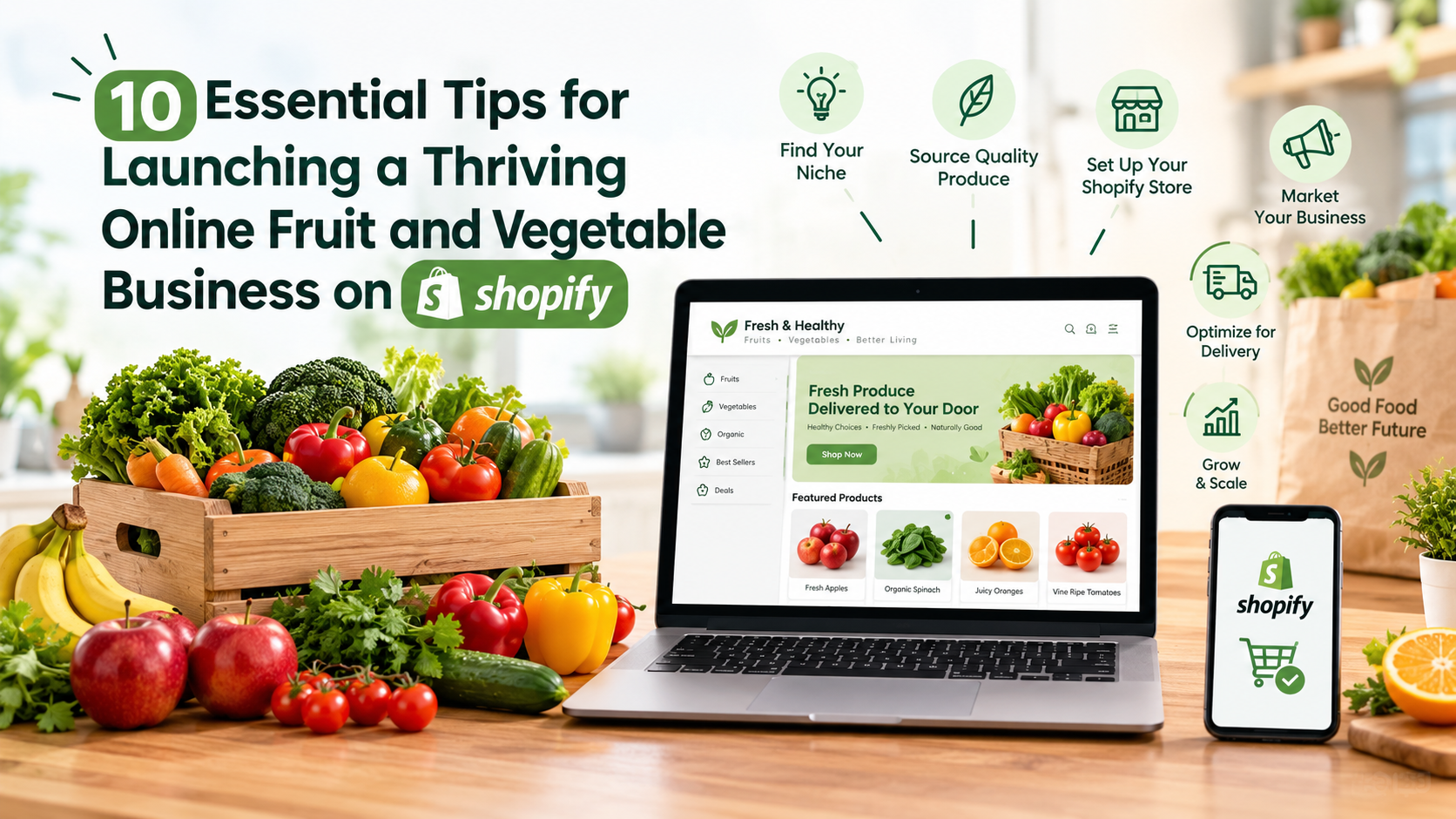
Introduction: The Fresh Produce E-commerce Boom
Are you considering starting your own online fruit and vegetable business? In 2026, it’s not just a passing trend—it’s a booming industry. Consumers are increasingly shifting towards digital grocery shopping, prioritizing the convenience of having fresh, high-quality produce delivered directly to their doorsteps. If you have ever thought about entering this lucrative and fast-paced market, there truly is no better time than now to capitalize on this growing demand.
Shopify, as an e-commerce platform, offers an unparalleled ecosystem for new entrepreneurs. It makes it incredibly straightforward to build a visually appealing online store, manage complex inventory efficiently, and connect with health-conscious customers who value seamless home delivery. However, just like any other modern enterprise, your success hinges heavily on laying a rock-solid foundation from day one. You can’t just list some apples and expect a million dollars in revenue. You need strategy, a deep understanding of your product, and impeccable execution.
In this comprehensive guide, we will explore ten highly actionable, practical tips to help you launch and scale your online fruit and vegetable business on Shopify. Whether you’re a local farmer looking to expand your reach or an aspiring entrepreneur passionate about healthy living, this step-by-step blueprint will set you on the path to e-commerce success.
1. Identify and Understand Your Specific Niche
The very first step in launching any successful e-commerce venture is achieving laser-like focus on your target demographic. Who exactly are you selling to? You cannot be everything to everyone. Are you targeting busy suburban families looking to introduce healthier meals into their routines? Or perhaps you’re aiming for a hyper-local customer base that values community-supported agriculture? Maybe your ideal customers are high-end, health-conscious buyers who only purchase certified organic goods.
The specific audience you choose to target will dictate almost every subsequent business decision you make, including your pricing strategy, your packaging materials, and your delivery logistics. For example, budget-conscious families might be searching for affordable, bulk “ugly” vegetable boxes to save money. In contrast, fitness enthusiasts might be looking for premium bundles of freshly pressed juices and superfood smoothie ingredients.
Before launching, invest significant time in researching your local market and analyzing your direct competitors. Ask yourself: Is there a noticeable gap in the market? Is no one selling fresh, locally sourced winter greens? Are there no premium, seasonal fruit gift baskets available for major holidays? By discovering and claiming your unique niche, you will establish a confident brand identity from day one, allowing you to stand out in a crowded digital landscape.
2. Build a Visually Stunning and Smart Shopify Store
While Shopify makes it notoriously easy for absolute beginners to launch an online store, your website’s design can literally make or break your brand. In the world of food e-commerce, people eat with their eyes first. A clean, modern, and fully mobile-optimized theme is absolutely crucial. Using a color palette heavily featuring greens, whites, and earthy tones will subconsciously reinforce the concept of farm-fresh natural produce.
The Power of High-Quality Imagery
You must use sharp, high-resolution photographs of your produce. Dull, poorly lit, or pixelated images will instantly destroy consumer trust. If your strawberries don’t look juicy and vibrant, nobody will buy them. Consider hiring a professional food photographer for your core product line, or invest in a decent lighting setup if you are taking photos yourself.
Transparent and SEO-Rich Descriptions
Your product descriptions need to be honest, engaging, and detailed. If you are selling a specific variety of apples, tell the customer exactly where it was grown, whether it is certified organic, and what type of packaging it will arrive in. In 2026, consumers demand unprecedented transparency regarding the origins of their food. They want to know the story behind the farm.
Furthermore, ensure your store features streamlined, intuitive navigation. Categories like “Fresh Fruits,” “Leafy Vegetables,” “Organic Bundles,” and “Seasonal Items” should be clearly visible. A confusing user interface will lead to high bounce rates and lost sales.
3. Establish a Bulletproof Supply Chain
There is absolutely nothing that will destroy an online fresh food business faster than a fragile supply chain resulting in poor quality, spoiled produce. Securing reliable local farmers, trusted regional growers, or reputable wholesale suppliers who consistently deliver top-tier quality is the lifeblood of your operation.
Whenever possible, physically visit the farms or distribution centers yourself. This hands-on approach helps build mutual trust and allows you to verify their growing standards and quality control processes firsthand. Do they use sustainable farming methods? Are their storage facilities adequately refrigerated?
Crucially, never rely on a single supplier. Always have secondary and tertiary backup suppliers secured. If your most popular items experience a sudden surge in demand or a crop failure, having multiple sourcing options ensures you won’t run out of stock during critical peak times.
Remember the golden rule of perishables: The longer the supply chain, the poorer the quality of the produce upon delivery. You must aggressively optimize your logistics to keep the chain as short as possible. The ideal flow is: Harvest directly to storage, immediately to packing, and straight out for delivery. Shorter chains equal fresher food and significantly reduced spoilage rates.
4. Invest in Spoil-Proof, Eco-Friendly Packaging
Let’s be brutally honest: nobody wants to open a delivery box to find bruised mangoes, squashed tomatoes, or wilted spinach. Packaging is not just a container; it is a critical component of product quality and brand perception. You must invest heavily in high-quality packaging that actively prevents your delicate produce from spoiling or suffering transit damage.
Sustainable Solutions for Modern Consumers
Furthermore, the modern consumer is highly eco-conscious. Avoid single-use plastics wherever possible. Instead, utilize sturdy, biodegradable cardboard boxes lined with protective kraft paper. For delicate items like berries or cherry tomatoes, consider compostable clamshells. Mesh bags made from natural fibers are excellent for potatoes, onions, and citrus fruits.
The Unboxing Experience
Never underestimate the power of the “unboxing experience.” Personalize your deliveries! Include a handwritten thank-you note, beautifully designed recipe cards featuring the seasonal items in the box, or a magnet with proper produce storage tips. You could even include a branded QR code that links directly to a blog post on your website. Small, thoughtful gestures are the exact catalyst needed to turn a one-time buyer into a fiercely loyal subscriber.
5. Master SEO to Drive Organic Traffic
Search Engine Optimization (SEO) is not just for tech companies; fruit and vegetable vendors desperately need an SEO strategy to survive. If people can’t find your store on Google, you don’t exist. You must strategically incorporate highly relevant keywords into your product names, page titles, and meta descriptions.
Instead of just naming a product “Apples,” use descriptive, keyword-rich titles like “Fresh Organic Gala Apples” or “Locally Sourced Seasonal Fruit Basket.” If you are focusing on a specific region, local SEO is paramount. Use location-specific keywords throughout your site, such as “Fresh Fruit Delivery in Austin” or “Organic Veggies Near Me.” The more specific and hyper-local you are, the higher you will rank in local search results.
Content Marketing through Blogging
Augment your product SEO by maintaining an active, informative blog. Write engaging, helpful articles on topics your target audience is actively searching for. Examples include “The Ultimate Guide to Storing Summer Berries,” “Top 5 Immune-Boosting Fruits for Flu Season,” or “How to Meal Prep with Our Weekly Veggie Box.” Consistent, high-quality blog posts will drive significant organic traffic to your store and position your brand as an authoritative voice.
6. Maximize Revenue with Subscriptions and Bundles
In the digital age, convenience is king. Consumers are incredibly busy, and taking the mental load off their grocery shopping is a massive value proposition. Offering subscription services for weekly or bi-weekly boxes of fresh produce is one of the most effective ways to guarantee recurring revenue and build a sustainable business model. Thankfully, Shopify offers numerous powerful apps designed specifically to manage seamless recurring billing and subscription fulfillment.
In addition to standard subscriptions, get creative with highly curated, customizable bundles. Offer distinct packages tailored to different lifestyles, such as a “Family Essentials Veggie Box” packed with staples like potatoes, carrots, and broccoli, or a “Juice Lover’s Detox Pack” overflowing with celery, green apples, ginger, and kale. Offering themed, seasonal bundles keeps your product lineup exciting and gives your customers a compelling reason to return to your store week after week.
7. Leverage Social Media to Build Community and Trust
Visual platforms like Instagram, TikTok, and Facebook are absolutely essential for marketing food businesses. People love to see where their food comes from. Leverage these platforms to pull back the curtain on your operation.
Post authentic, unedited photos of your vibrant produce. Share behind-the-scenes video reels of farm visits, showing exactly how the crops are grown and harvested. Post time-lapse videos of your team carefully packing the beautifully curated delivery boxes. This type of raw, authentic content builds immense trust and transparency.
Engage and Interact
Don’t just broadcast; engage! Use Instagram Stories to ask interactive questions like, “What is your absolute favorite summer fruit?” or use polls to ask, “Should we add exotic dragonfruit to next month’s exotic bundle?” By actively conversing with your audience, you make your brand feel deeply personal and community-driven, sharply differentiating yourself from faceless corporate supermarket chains.
Consider partnering with local micro-influencers, chefs, or certified nutritionists. Have them create short, engaging recipe videos using your specific produce. This not only expands your reach to their followers but also demonstrates the practical, delicious value of your products.
8. Implement Lightning-Fast and Reliable Delivery
When dealing with highly perishable goods, delivery speed isn’t just a perk; it’s the entire product. Local delivery logistics can be famously complex, so you must carefully evaluate your capabilities. Will you manage an in-house fleet of delivery drivers, or will you partner with established local courier services specializing in cold-chain logistics?
Whatever route you choose, ensure the system is heavily integrated with your Shopify dashboard for seamless order tracking. Communication is arguably more important than speed. Implement automated SMS or email notifications to keep customers hyper-informed. Let them know exactly when their order is being packed, when it is out for delivery, and the moment it arrives at their door. This level of communication drastically reduces customer anxiety.
If financially and logistically feasible, offering same-day or guaranteed next-day delivery within a specific hyper-local radius is an incredible competitive advantage. The promise of “Farm to Fork in 24 Hours” is a powerful marketing hook that practically sells itself.
9. Cultivate Credibility Through Reviews and Transparency
In the world of online shopping, social proof is everything. Actively encourage your satisfied customers to leave authentic, detailed reviews on your product pages. Utilize automated email flows that trigger a few days after delivery, politely asking for feedback. Even a simple, glowing review stating, “These heirloom tomatoes were the best I’ve ever tasted!” goes an incredibly long way in convincing hesitant new visitors to complete their purchase.
Double down on your commitment to transparency. Create a dedicated “Our Farmers” page on your store. Highlight the specific local farms you partner with, share brief stories about the farmers themselves, and detail the sustainable practices they employ. Modern consumers feel genuinely good knowing their hard-earned money is directly supporting real, local agricultural communities rather than massive, opaque corporations.
Finally, maintain absolute transparency regarding your pricing structure and delivery fees. Hidden costs at checkout are the number one cause of cart abandonment. Be upfront about delivery minimums and service charges. Clarity builds trust, and trust is the ultimate driver of long-term repeat business.
10. Analyze, Adapt, and Evolve Relentlessly
The e-commerce landscape is never static, and neither should your business be. If you rest on your laurels, your competitors will quickly surpass you. Make it a habit to dive deep into your Shopify analytics dashboard on a weekly basis.
Analyze the data ruthlessly: Which specific fruits yield the highest profit margins? What time of day do most of your orders come in? Which landing pages have the highest bounce rates? Use this hard data to inform your marketing strategies and inventory purchasing decisions.
Equally important is qualitative data—actively listen to your customers. Send out quarterly surveys asking for feedback on product selection and delivery experience. Perhaps your data shows a growing trend of customers requesting smaller, single-person bundles, or an increasing demand for pre-washed, ready-to-eat salads. Adapting quickly to shifting consumer desires is the hallmark of a resilient, successful retail brand.
As you master the basics, begin looking for lucrative avenues of expansion. If your fresh produce is selling well, consider branching out into high-margin adjacent categories. You could start offering cold-pressed organic juices, artisanal healthy snacks, homemade jams, or premium dried fruit packs. The growth potential is truly limitless once you have established a loyal customer base.
Conclusion: Crafting a Farm-Fresh Experience
Starting an online fruit and vegetable business on Shopify in 2026 is about much more than merely executing a transaction. You are not just selling calories; you are crafting a holistic experience. You are selling health, convenience, and a connection to local agriculture.
Today’s consumers desperately want to feel like they are directly supporting honest, hardworking local growers who provide fresh, trustworthy, and nutritious food. Every single touchpoint—from the aesthetic cleanliness of your digital storefront to the lightning-fast speed of your delivery, the eco-friendly nature of your packaging, and the warmth of your customer service—adds up to create your brand’s reputation.
So, how do you take the first step? Start small, but think big. Thoroughly research your niche, secure reliable suppliers, and build a beautiful, user-friendly Shopify store. Focus relentlessly on quality and customer satisfaction. That very first basket of crisp apples or perfectly ripe avocados you sell could be the humble beginning of a thriving, highly profitable e-commerce empire. The future of grocery shopping is online, and it’s time for you to claim your slice of the pie.