The Defining Factors of American Politics: An Introduction to Swing States
In the vast and complex landscape of United States presidential elections, not all states are created equal in the eyes of political strategists. While some regions remain staunchly loyal to either the Democratic or Republican party, a select few—known interchangeably as swing states or battleground states—hold the ultimate power to decide the nation’s future. As we approach the highly anticipated political landscape of 2025 and beyond, understanding the mechanics of these pivotal arenas is more crucial than ever.
Swing states are defined by their unpredictability. They do not have a consistent voting record favoring one party over consecutive elections. Instead, they operate like a swinging pendulum, shifting their allegiance based on current events, candidate appeal, and localized issues. This inherent unpredictability elevates their status to unparalleled heights during campaign seasons. Presidential candidates devote an overwhelming majority of their strategic endeavors, financial resources, and physical presence to securing the electoral votes of these regions, knowing full well that a victory in a key battleground can mean the difference between winning the White House and facing a crushing defeat.
The Math Behind the Magic: The Importance of Swing States in the Electoral College
To truly grasp the significance of swing states, one must first understand the unique system the United States uses to elect its president: the Electoral College. In this system, a candidate must secure a minimum of 270 out of 538 electoral votes to win the presidency. Because the number of electors assigned to each state is determined by its population size, campaigns strategically target states where electoral votes do not tilt largely in favor of one party or the other.
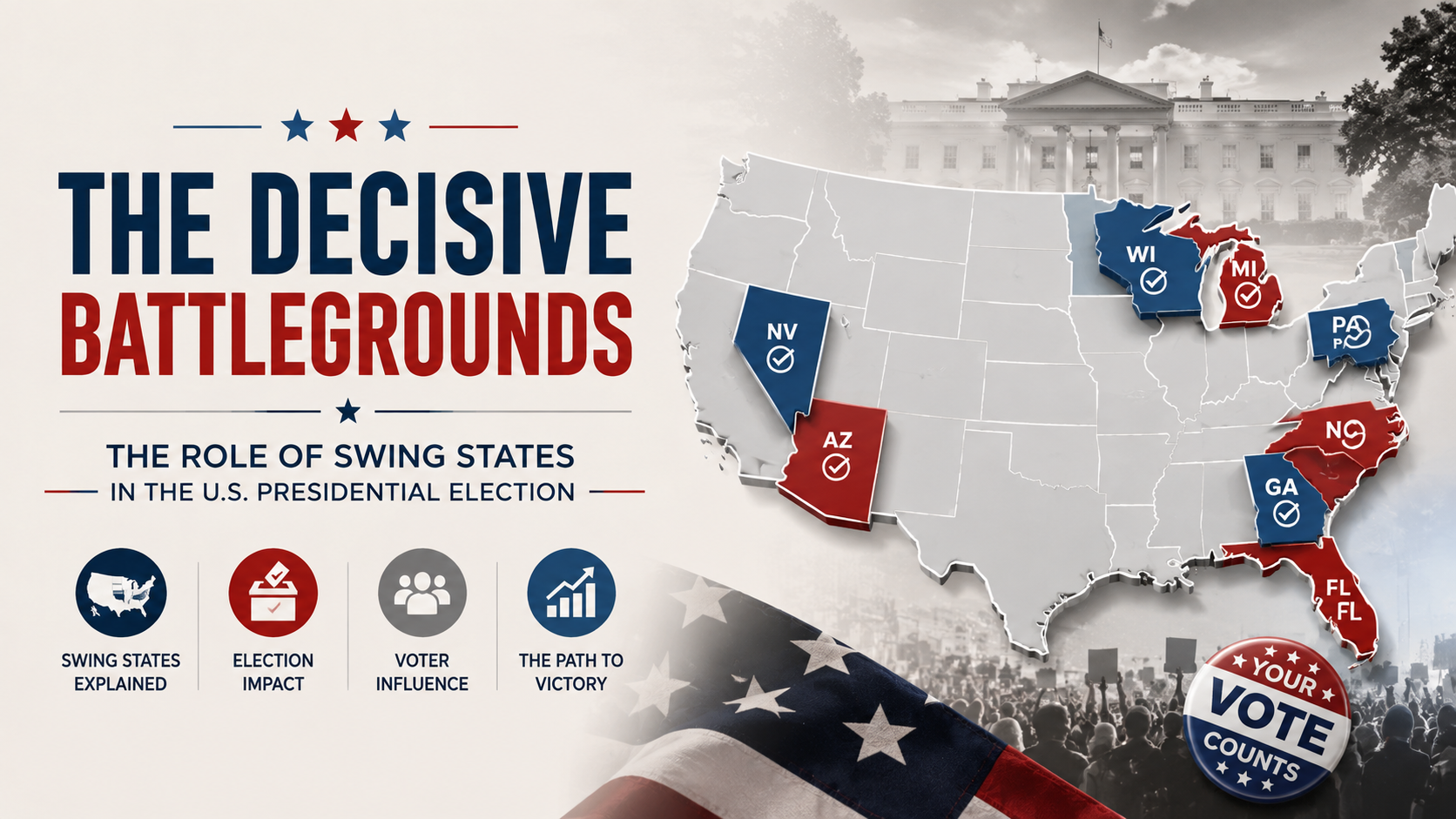
Consequently, states like Florida, Pennsylvania, Wisconsin, Michigan, Nevada, and Arizona have become regular battlegrounds. Their electoral decisions are known to flip from one election cycle to another, keeping political analysts and campaign managers on edge. Swing states often boast a significant number of electoral votes, making them incredibly lucrative prizes. For instance, a populous state like Florida holds numerous electoral votes that can absolutely sway an election’s outcome. The geographic consistency and varied voting patterns across different swing states mean that a candidate cannot rely on a one-size-fits-all message. Instead, they must personalize their approach to address the specific and often hyper-local concerns of each individual state.
What Makes a State Swing? Unpacking the Characteristics
There are various underlying factors that ascertain the position of a state as a battleground. The demographic composition plays a paramount role. When a state features a balanced mix of urban centers, sprawling suburbs, and extensive rural areas, it often leads to a scenario where a wide variety of political opinions and cultural values coexist. This diversity prevents any single ideology from achieving a permanent stronghold.
Economic realities also profoundly affect voting behavior. Issues such as localized unemployment levels, the health of key regional industries (like auto manufacturing in the Rust Belt or agriculture in the Midwest), and cost of living directly influence how citizens cast their ballots. Furthermore, social issues—ranging from healthcare accessibility and education reform to immigration policies—tend to emerge as critical talking points during campaigns, reflecting the particular anxieties and aspirations of the residents.
Even in the absence of dramatic demographic or economic shifts, historical voting patterns carry significant weight. States that have switched back and forth between Democratic and Republican candidates in recent memory serve as prime examples of fluid voter loyalty. For example, Pennsylvania voted decisively for Barack Obama in 2008 and 2012, flipped to Donald Trump in 2016, and swung back to Joe Biden in 2020. This fluidity indicates that solid groundwork, highly targeted advertising campaigns, and a finely tuned, persuasive message are more important than ever for anyone aiming to secure a victory in 2025 and future cycles.
Key Battlegrounds to Watch in 2025
As the political machinery gears up for the landscape of 2025, certain states continue to dominate the strategic map. The Rust Belt trio of Pennsylvania, Michigan, and Wisconsin remains a fiercely contested wall, where messages about union labor, manufacturing jobs, and economic revitalization resonate deeply. Meanwhile, the Sun Belt states of Arizona and Nevada present a different set of challenges, with rapidly changing demographics, growing Latino populations, and pressing concerns over water rights, climate change, and immigration.
Georgia has also emerged as a fascinating focal point, transforming from a reliably red state to a highly competitive battleground due to significant population growth and demographic shifts in the Atlanta metropolitan area. The sheer diversity of these states means that national campaigns must operate multiple, distinct mini-campaigns simultaneously, each tailored to the unique cultural and economic realities of the target region.
Winning Hearts and Minds: Campaign Strategies in Swing States
Because they are inherently unpredictable, campaign strategies deployed in swing states look vastly different from those used in ‘safe’ states. Candidates typically up the ante in these regions, saturating them with town hall meetings, massive rallies, and localized media appearances. This intense physical presence allows them to connect directly with voters and address their specific grievances. Furthermore, campaigns funnel astronomical sums of money into targeted television, radio, and digital advertisements designed to capitalize on the unique concerns of voters in those particular markets.
Beyond high-profile candidate visits and media blitzes, modern campaigns focus heavily on aggressive grassroots mobilization. Local volunteers and community organizations have a massive role to play in identifying undecided voters, communicating tailored messages, and—most importantly—executing sophisticated ‘get out the vote’ (GOTV) operations on Election Day. The issues that resonate most with swing state voters may be worlds apart from the national discourse and must be carefully woven into the candidates’ platforms.
For example, if a specific state’s economy is struggling due to the decline of a local industry, candidates running for office are sure to focus their messaging on job creation, economic recovery, and specialized training programs for displaced workers. Conversely, in states with significant minority populations, issues pertaining to civil rights, social justice, and systemic equality will likely dominate local debates and campaign promises.
The Ripple Effect: The Impact of Swing States on National Politics
The influence of swing states extends far beyond simply determining the winner of the presidency; they actively shape broader political trends at the national level. Issues that gain traction in these battlegrounds often define the national discourse and force their way into the official manifestos of the major political parties. For instance, if the cost of prescription drugs is identified as the paramount issue for undecided voters in a critical swing state, politicians at the national level will undoubtedly pay close attention, likely elevating healthcare reform to a central pillar of their overall election strategy.
Furthermore, the intense focus on swing states during a presidential campaign can act as a powerful catalyst for both congressional and state-level elections. A successful presidential campaign in a battleground state can generate significant down-ballot momentum. Winning a swing state victory could open doors to further political possibilities, flipping state legislatures, securing critical Senate seats, and altering the balance of power across multiple levels of government.
The Flip Side: Criticisms and Struggles of the Swing State Focus
Despite their undeniable importance, the overwhelming emphasis placed on swing states raises serious questions about democratic representation and fairness. Critics of the Electoral College system argue that, under the current paradigm, candidates spend disproportionately little time, money, and attention on voters residing in ‘safe’ states. For millions of citizens living in predictably blue states like Massachusetts or California, or reliably red states like Wyoming or Oklahoma, the presidential campaign often feels like a distant spectacle happening elsewhere.
This dynamic creates an environment where the vast majority of the country is effectively ignored during the general election, while candidates shift nearly all of their activities and policy focus to a handful of battlegrounds. In addition to disenfranchising voters in safe states, the heightened attention on swing states can lead to intense voter fatigue and disaffection within the battlegrounds themselves. Residents of these states are often subjected to an unrelenting barrage of political advertisements, text messages, and canvassing efforts, which can lead to cynicism and burnout.
Moreover, it creates a lingering impression that politicians only value these citizens when an election cycle is underway, raising fundamental questions about the overall health and equity of the American democratic process.
Conclusion: The Enduring Legacy of Battleground States
In conclusion, swing states remain an absolutely necessary and defining component of the United States electoral map. They are the crucibles in which presidential elections are won and lost. The highly competitive and uncertain environment they foster requires candidates to expend immense amounts of time, capital, and strategic effort to win the hearts and minds of key voter demographics. As we look ahead to 2025, it is clear that the invisible dynamics of these battlegrounds will continue to explain the profound nuances of American democracy.
Swing states do not merely shape electoral outcomes; they act as a mirror, reflecting the varied, complex, and often contradictory interests and priorities of the American electorate. While the system is not without its flaws and fierce critics, battleground states remain firmly positioned at the heart of the ongoing national debate over representation, democratic engagement, and the future direction of U.S. politics. Whether one views them as the ultimate test of a candidate’s appeal or a structural flaw in the electoral system, there is no denying that the road to the White House runs directly through the swing states.