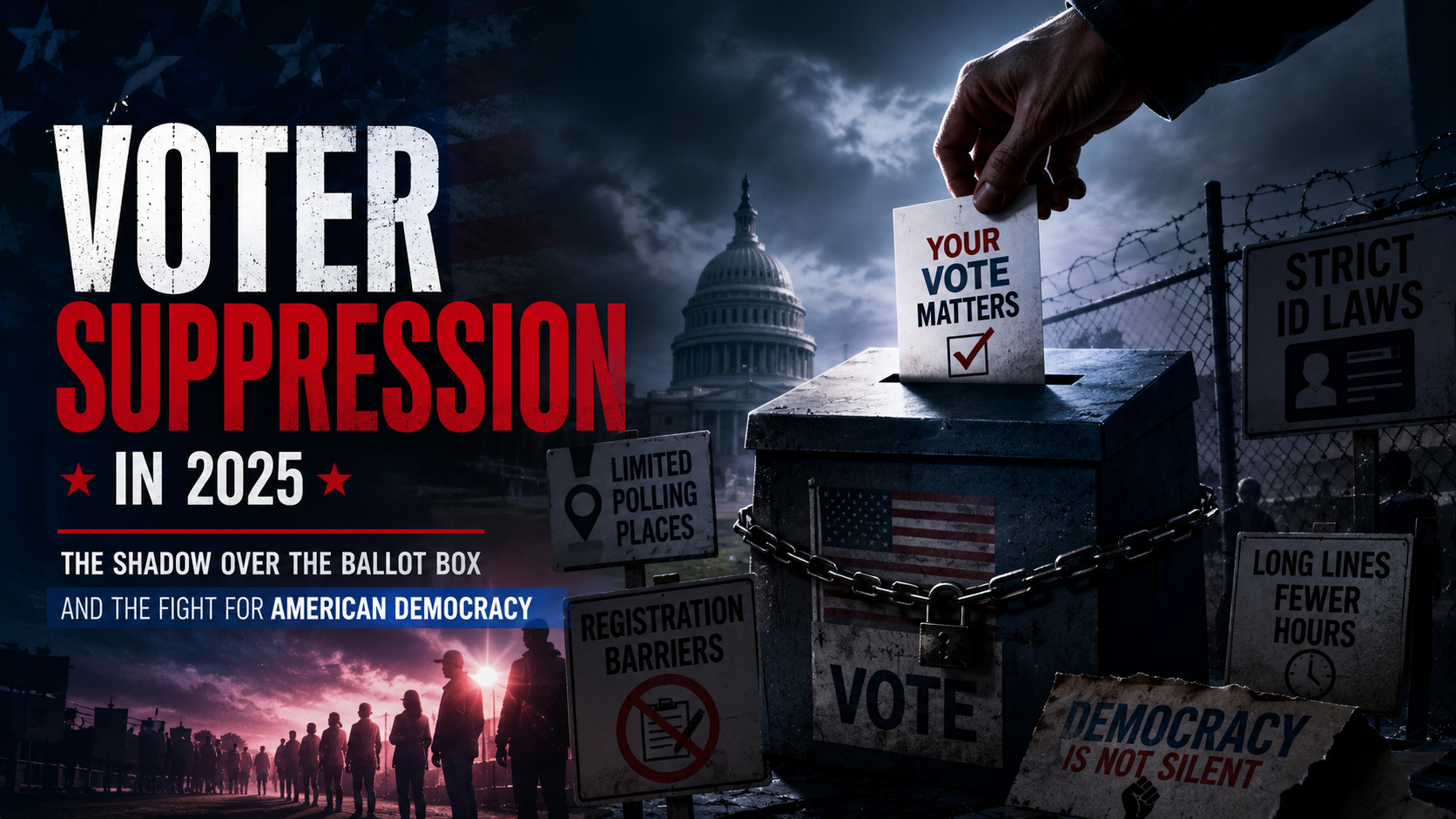
The Shadow Over the Ballot Box: Understanding the Crisis
The right to vote is often heralded as the beating heart of any functioning democracy. It is the great equalizer, the mechanism through which every citizen, regardless of wealth, status, or background, can have a say in the direction of their nation. However, as we navigate through 2025, a pervasive and insidious threat continues to undermine this foundational principle in the United States: voter suppression. Far from being a relic of the past, voter suppression has evolved, adopting new disguises and employing sophisticated strategies to dampen or entirely prevent specific categories of citizens from exercising their constitutional right to vote.
This is not merely a theoretical or administrative concern; it is a direct assault on the equity, diversity, and independence of the electoral process. By systematically raising barriers to the ballot box, these tactics disproportionately impact marginalized groups, including minority communities, low-income citizens, the elderly, and young voters. The result is a skewed electorate and a democracy that fails to truly reflect the will of its people. Understanding the multifaceted nature of voter suppression is the first crucial step in dismantling it and safeguarding the integrity of our elections for future generations.
Decoding Voter Suppression: A 2025 Perspective
To combat voter suppression effectively, we must first recognize it in all its modern forms. Gone are the days of explicit poll taxes or literacy tests; today’s methods are often cloaked in the language of election security and administrative efficiency. Yet, the outcome remains the same: disenfranchisement. What exactly constitutes voter suppression in 2025? It encompasses a broad array of legislative, administrative, and logistical hurdles designed to make voting more difficult, less accessible, and ultimately, less likely for targeted demographics.
These barriers do not happen by accident. They are often the result of deliberate policy choices that prioritize the restriction of access over the expansion of participation. From strict identification requirements to the reduction of polling locations, each tactic serves as a subtle yet effective poll barrier. When compounded, these hurdles create a daunting obstacle course that can deter even the most motivated citizens from casting their ballots.
The Escalation of Strict Voter ID Laws
One of the most prominent and fiercely debated forms of voter suppression is the implementation of strict voter photo identification laws. Proponents of these measures frequently argue that they are necessary to combat widespread voter fraud and ensure the integrity of elections. However, exhaustive research and numerous legal inquiries have consistently shown that in-person voter fraud is vanishingly rare. The true impact of these laws falls squarely on the shoulders of those who face systemic barriers to obtaining the required identification.
Acquiring a government-issued photo ID is not as simple as it seems for everyone. It often requires time, money, transportation, and access to underlying documents like birth certificates, which can themselves be costly and difficult to obtain. As a result, strict voter ID laws disproportionately burden marginalized populations. Minority voters, low-income individuals, students, and the elderly are statistically far less likely to possess the specific types of identification mandated by these laws. By establishing an arbitrary threshold for participation, states effectively lock out significant swaths of the electorate, silencing their voices under the guise of security.
Aggressive and Flawed Voter Roll Purges
Maintaining accurate voter registration lists is a standard and necessary administrative function. State election officials must routinely update these lists to remove individuals who have passed away, moved to another jurisdiction, or otherwise become ineligible to vote. This process, known as purging, is intended to keep the rolls current. However, when applied aggressively, inconsistently, or relying on faulty data, voter roll purges become a potent tool for suppression.
In recent years, we have witnessed a disturbing trend of overzealous purges that sweep up eligible and duly registered voters alongside the inactive ones. Individuals who may have skipped a single election cycle or simply have names similar to those of ineligible voters find themselves unexpectedly removed from the registry. The devastating reality of this tactic often only becomes apparent on Election Day. Imagine the frustration and disenfranchisement experienced by citizens who take the time to travel to their polling place, only to be turned away because their names have been arbitrarily struck from the rolls. This practice not only denies individuals their immediate right to vote but also breeds profound distrust in the electoral system as a whole.
The Strategic Reduction of Polling Stations
Logistical barriers are just as effective as legislative ones when it comes to suppressing the vote. One such tactic is the systematic closure, relocation, or consolidation of polling places, particularly in neighborhoods with high concentrations of minority or low-income residents. By reducing the number of available voting locations, election officials inadvertently—or intentionally—create massive bottlenecks on Election Day.
The consequences are immediate and visible: hours-long lines that snake around city blocks. For many citizens, waiting in line for several hours is not just an inconvenience; it is an impossibility. Hourly workers who cannot afford to take unpaid time off, parents without access to reliable childcare, and individuals with physical disabilities are disproportionately penalized by these extended wait times. When the simple act of casting a ballot requires a heroic sacrifice of time and resources, it ceases to be a freely exercised right and becomes a privilege reserved for those with the flexibility to endure the process. This logistical suppression silently erases the votes of thousands who simply cannot afford the cost of waiting.
The Ripple Effect: How Suppression Corrodes Democracy
The implications of voter suppression extend far beyond individual elections or specific partisan outcomes. When structural barriers consistently exclude certain segments of the population from the democratic process, the very foundation of the republic is undermined. It represents a fundamental hostility to the core democratic ideal that all citizens are created equal and deserve an equal voice in their governance.
A Crisis of Legitimacy
For a democracy to function effectively, its citizens must believe in the legitimacy of the electoral process and the government it produces. When systematic exclusion becomes apparent, this credibility evaporates. If substantial portions of the electorate are demonstrably hindered from participating, the resulting election outcomes cannot be seen as a true reflection of the public will. This breeds a deep-seated lack of legitimacy that can paralyze governance, fuel extreme polarization, and destabilize the social contract.
Distorted Policy and Unequal Representation
Elections are the primary mechanism through which citizens influence public policy. When voter suppression tactics successfully drive down turnout among specific groups—such as minorities and young people—the resulting electorate becomes skewed. Consequently, the elected officials who assume power may not accurately represent the diverse needs and interests of the entire population. This leads to a vicious cycle where policies are enacted that favor the demographics able to vote easily, while the concerns of marginalized, suppressed groups are routinely ignored or deprioritized. It creates a government that is an unrepresentative, distorted expression of the people.
The Danger of Long-Term Disillusionment
Perhaps the most insidious effect of voter suppression is the psychological toll it takes on the electorate over time. The subtle, persistent barriers to voting can amplify cycles of disenfranchisement. When people repeatedly encounter deliberate hurdles, face hours-long lines, or discover their registration has been purged, the message they receive is clear: their participation is not valued. If citizens feel their voices are structurally silenced and that their votes ultimately do not count, they may surrender to apathy. This disillusionment can depress civic engagement for generations, hollowing out the democracy from within as fewer and fewer people bother to participate in a system they view as fundamentally rigged.
Forging a Path Forward: Combating Voter Suppression
The fight against voter suppression is a complex, ongoing battle that requires vigilance, coordination, and a multidimensional approach. To dismantle these barriers and restore the promise of an inclusive democracy, advocates, policymakers, and everyday citizens must join forces to champion fair voting practices.
Expanding and Protecting Legislative Rights
The most robust defense against suppression lies in strong, comprehensive legislative protections at both the federal and state levels. The passage of universal voting rights legislation is paramount to establishing national baselines for access and preventing discriminatory practices. Laws that proactively expand access to the ballot box must be prioritized. Implementing automatic voter registration ensures that eligible citizens are seamlessly added to the rolls when interacting with government agencies. Same-day voter registration provides a crucial safety net for those who may have missed deadlines or been erroneously purged. Furthermore, restoring the voting rights of formerly incarcerated individuals is a vital step toward reintegrating them into civic life and ending a uniquely American form of disenfranchisement.
Empowering Communities Through Education and Outreach
Knowledge is a powerful antidote to suppression. Comprehensive voter education campaigns are critical components of a healthy democratic ecosystem. These initiatives must go beyond simply reminding people to vote; they must explicitly inform citizens of their rights, the specific procedures required to register, and the exact requirements for casting a ballot in their jurisdiction. Targeted outreach is especially necessary to engage marginalized groups who have historically been excluded from the electoral process. By demystifying the voting process and equipping individuals with the necessary information, community organizations can empower voters to navigate and overcome the administrative hurdles deliberately placed in their path.
Implementing Vigorous Monitoring and Accountability
To combat suppression, we must be able to identify it as it happens. Robust mechanisms for monitoring election administration and reporting irregularities are essential. Independent organizations and nonpartisan observers play a crucial role in tracking instances of suppression, from polling place closures to the arbitrary rejection of mail-in ballots. However, monitoring alone is insufficient without accountability. There must be meaningful sanctions for states and jurisdictions that engage in discriminatory practices. Connecting oversight to tangible consequences ensures that those who attempt to subvert the democratic process are held responsible.
The Crucial Role of Judicial Intervention
The courts remain a vital battleground in the fight for voting rights. Legislative and legal advocacy is necessary to challenge repressive laws and practices before they can infect an election cycle. Legal organizations and civil rights groups must continue to litigate against strict ID laws, aggressive purges, and gerrymandered districts that dilute minority voting power. The judicial system serves as a crucial safeguard, capable of striking down unconstitutional barriers and mandating equitable access. A vigilant and proactive legal strategy is essential to protecting the fundamental right to vote in the face of ongoing legislative assaults.
Conclusion: The Imperative of an Inclusive Democracy
As we look toward the future in 2025 and beyond, it is clear that voter suppression remains a heavy and persistent impediment to the democratic ideals of the United States. It is a calculated threat to the most basic right that each citizen possesses: the right to participate equally in the electoral process. Ensuring that this right is universally accessible is not a partisan issue; it is the prerequisite for a society where all citizens have an equal opportunity to voice their concerns and hold their leaders accountable.
Through relentless advocacy for fair voting practices, widespread educational outreach, vigorous legal challenges, and a commitment to holding oppressors accountable, we can dismantle the barriers that divide our electorate. The cause to combat voter suppression is of paramount importance. It is a fight not only for the integrity of individual elections but for the very preservation of democratic values. Only by ensuring the unimpeded representation of all citizens in the political process can we truly realize the promise of a government of the people, by the people, and for all the people.