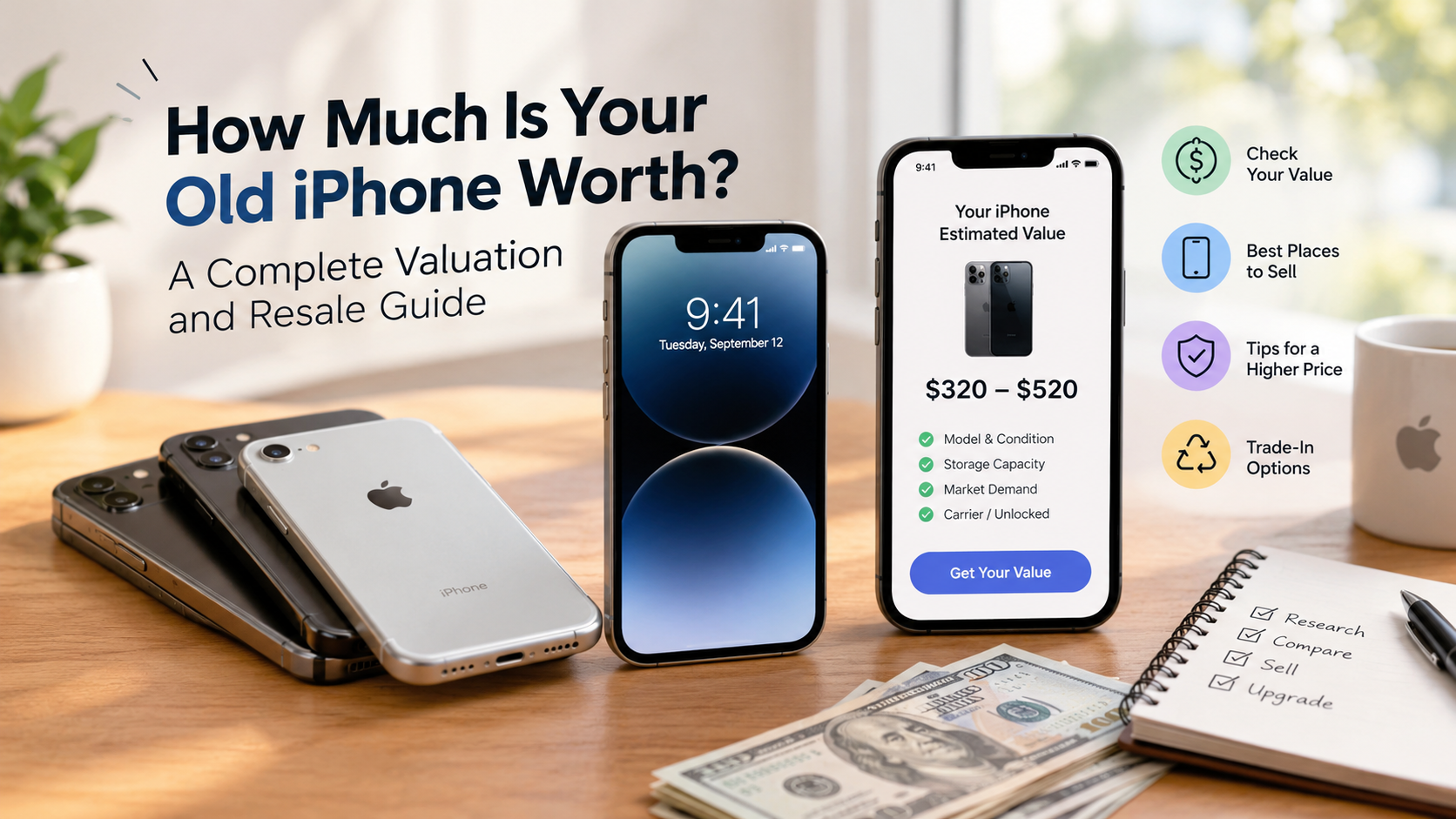
Have you ever opened a desk drawer only to find an old smartphone sitting beneath tangled charging cables? You are far from alone. Millions of functional smartphones sit unused in homes across the country, quietly gathering dust while losing value with each passing month. Whether you upgraded recently or kept an older handset as a backup, that retired device often carries more value than you think.
Thanks to the booming market for refurbished tech, pre-owned smartphones hold steady value. Buyers frequently prefer reliable refurbished devices over brand-new flagships with steep price tags. But before you list your device or accept an instant quote, knowing what determines your phone’s true worth can help you secure the best payout. In this guide, we explore the key factors influencing your old iPhone’s value, break down popular models, and share practical tips to maximize your return.
Key Factors That Determine Your Old iPhone’s Value
Valuing a pre-owned smartphone resembles evaluating a used car. Two identical devices can command different offers depending on their history and condition. Here are the core variables buyers evaluate:
1. Overall Cosmetic Condition
Physical appearance is the most critical factor. Devices are typically graded into clear categories:
- Flawless: Zero display scratches, pristine housing, and immaculate camera lenses.
- Good: Faint surface marks or micro-scratches that do not hinder viewing or usability.
- Fair: Visible scratches, small casing dings, or finish wear, but completely crack-free.
- Damaged: Cracked glass, dead pixels, or failing buttons. These retain scrap value, but command steep deductions.
2. Internal Storage Capacity
Storage capacity directly affects resale prices. Base models like 64GB suit casual users, but 128GB, 256GB, and 512GB tiers earn higher offers. High-capacity devices sell faster because modern apps, media, and photo libraries fill modest drives quickly.
3. Battery Health
Apple displays battery health directly in Settings. A maximum capacity rating above 85% signals reliable daily performance. If capacity falls under 80%, trade-in platforms deduct replacement fees from their baseline offer.
4. Carrier Status: Unlocked vs. Locked
A factory-unlocked iPhone commands 10% to 20% more than a network-locked unit. Unlocked devices allow buyers to use any provider, international eSIM, or discount carrier, expanding overall buyer demand.
5. Original Packaging and Accessories
Having the original box, documentation, and authentic charging cable adds perceived value. For private buyers, complete accessories signal that the device was handled responsibly throughout its lifetime.
Model-by-Model Breakdown: What Are Older iPhones Worth?
Every iPhone generation occupies a distinct position in the secondary market. As newer flagships arrive, previous models transition into affordable favorites. Here is how popular generations rank in the pre-owned market:
iPhone 11: The Budget Workhorse
The iPhone 11 remains a resilient favorite. Driven by the A13 Bionic chip, it handles daily browsing, messaging, and streaming effortlessly. Its dual-camera setup takes crisp photos, and battery life remains dependable. Clean 64GB and 128GB units attract steady demand from shoppers wanting a capable iOS device at an accessible price point.
iPhone 12 Series: The 5G Turning Point
The iPhone 12 introduced flat-edge styling, OLED Super Retina XDR displays, MagSafe compatibility, and 5G speeds. Because its appearance mirrors modern flagships, it feels sleek in hand. Well-maintained iPhone 12 models represent a sweet spot, providing strong trade-in payouts and fast resale liquidity.
iPhone 14 Series: Strong Residual Value
Handsets from the iPhone 14 lineup maintain remarkable value retention. With advanced sensors, Satellite Emergency SOS, and swift silicon, they meet every modern demand. Upgrading from an iPhone 14 allows you to recover substantial cash, provided the screen and back glass remain flawless.
iPhone X and iPhone XR: Affordable Entry Devices
Older generations like the iPhone X and iPhone XR still find eager buyers. The iPhone X offers an edge-to-edge OLED panel in a pocket-friendly footprint, while the iPhone XR excels in durability and battery endurance. If Face ID operates properly, both phones fetch respectable budget returns.
iPhone SE: Compact Power for Everyday Use
The iPhone SE family appeals to fans of compact bodies, tactile Home buttons, and Touch ID convenience. Second- and third-generation models pair classic ergonomics with rapid processing. Because small phones are increasingly scarce, tidy SE devices sell briskly to minimalist users.
Where to Sell Your Used iPhone
Choosing a sales channel involves balancing convenience, speed, and overall payout. Three main paths exist:
1. Refurbished Marketplaces
Specialized platforms like Back Market streamline selling pre-owned tech. You receive upfront pricing based on verified grading tiers without awkward buyer negotiations. Back Market pairs devices with a 12-month warranty and 30-day return window, establishing buyer trust that supports consistent resale values.
2. Carrier Trade-In Programs
Carriers frequently offer impressive promotional credits toward new hardware. However, these payouts are usually split into monthly billing credits across 24 to 36 months. If you want direct cash or plan to switch networks, carrier programs are restrictive.
3. Direct Peer-to-Peer Sales
Selling directly on classifieds or marketplaces can yield higher gross proceeds. Yet it demands writing listings, fielding messages, managing shipping, and dodging scams. Many sellers find the minor price boost is not worth the hassle.
When Is the Best Time to Sell an Old iPhone?
Timing your sale can preserve significant resale equity. Smartphones depreciate continuously, but key seasonal factors accelerate value loss.
The Annual Autumn Keynote
Every September, Apple unveils new flagships. Once announced, trade-in values for previous generations typically slide 10% to 20% within weeks. Locking in a trade-in quote in August or early September secures the best possible payout.
Software Support Lifecycles
Apple supports older models with iOS updates for roughly five to six years. When a handset loses major update support, buyer interest cools. Selling while your device still runs the latest iOS ensures maximum demand.
Smart Steps to Prepare Your iPhone for Sale
Proper preparation protects your private data and ensures you receive the full quoted value without deductions. Follow this simple pre-sale checklist:
- Back Up Your Data: Save your photos, messages, and files using iCloud backup or by connecting to your computer.
- Sign Out of Apple ID and Turn Off Find My: Leaving Find My or Activation Lock active prevents the buyer or refurbisher from using the phone, rendering it unsellable. Tap Settings, select your Apple profile, and sign out completely.
- Erase All Content and Settings: Reset the device to factory specifications under Settings > General > Transfer or Reset iPhone > Erase All Content and Settings.
- Clean the Device: Wipe the screen, sides, and camera lenses with a clean microfiber cloth slightly dampened with water or 70% isopropyl alcohol. Gently clean dust from the speaker grilles and charging port.
- Remove the SIM Card: Pop out your physical nano-SIM card, or ensure your eSIM profile was cleared during the factory reset process.
Frequently Asked Questions
How quickly do used iPhone prices decline?
Apple hardware depreciates at a slower pace than most consumer electronics. iPhones typically keep 60% to 70% of their retail price during the first year and about 45% after two years. The most noticeable value drop occurs when Apple introduces its annual flagship line.
Is it worth replacing a cracked screen before selling?
Usually, no. Certified screen replacements cost $100 to $350. Because professional refurbishers fix screens at wholesale rates, you rarely recoup repair costs. You are generally better off selling the device as-is in a fair or damaged tier.
Can I sell an iPhone that will not turn on?
Yes. Refurbishers and recyclers accept non-working devices for parts. While payouts are modest, it prevents e-waste and reclaims valuable components.
Why do unlocked phones earn higher offers?
Unlocked phones give buyers freedom to select any carrier or international SIM. A wider pool of prospective buyers leads to faster sales and higher bids.
Final Thoughts
Leaving an unused iPhone in a drawer is like leaving cash on the table. The market for pre-owned technology remains vibrant, and even older devices carry real financial value. By checking battery health, cleaning your device, and choosing a trusted marketplace like Back Market, you can turn your idle tech into extra cash while supporting a sustainable circular economy.